
Last updated November 4, 2026
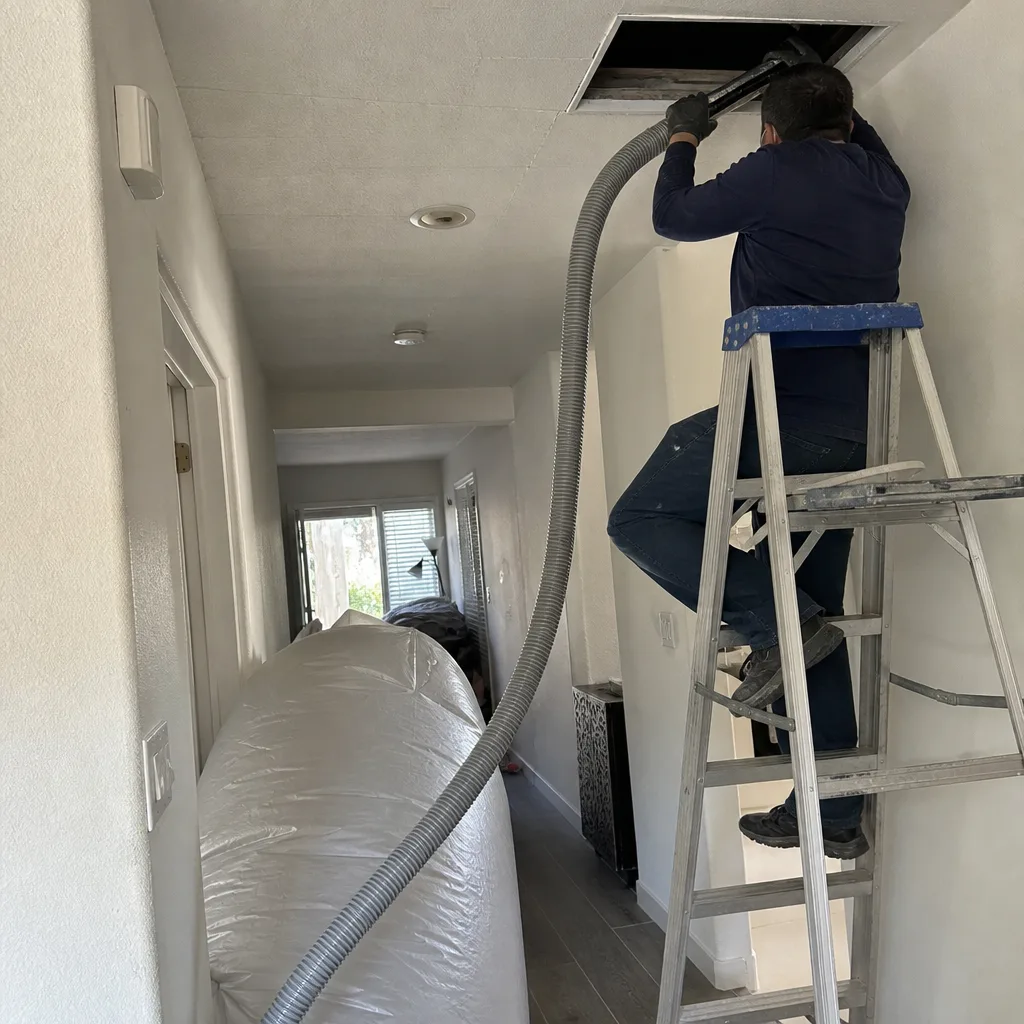
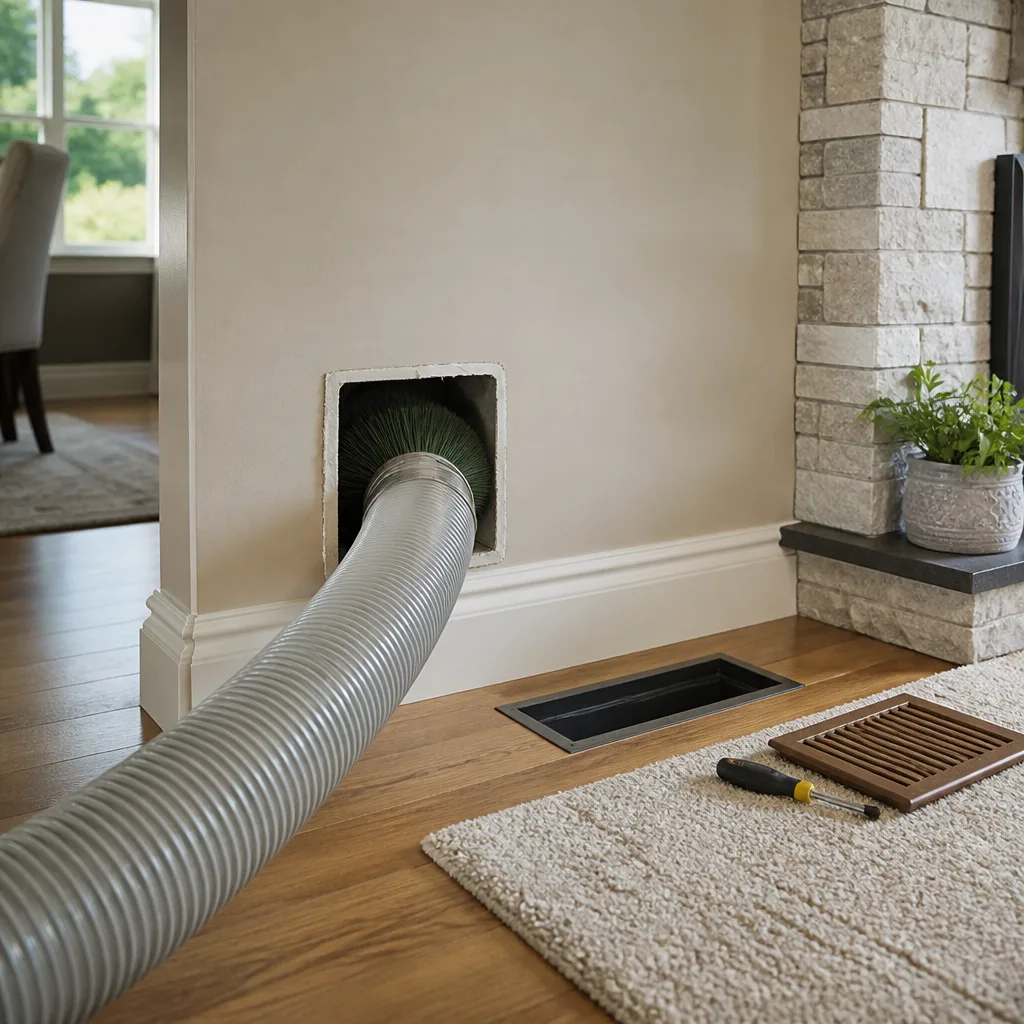 Whole-home duct cleaning
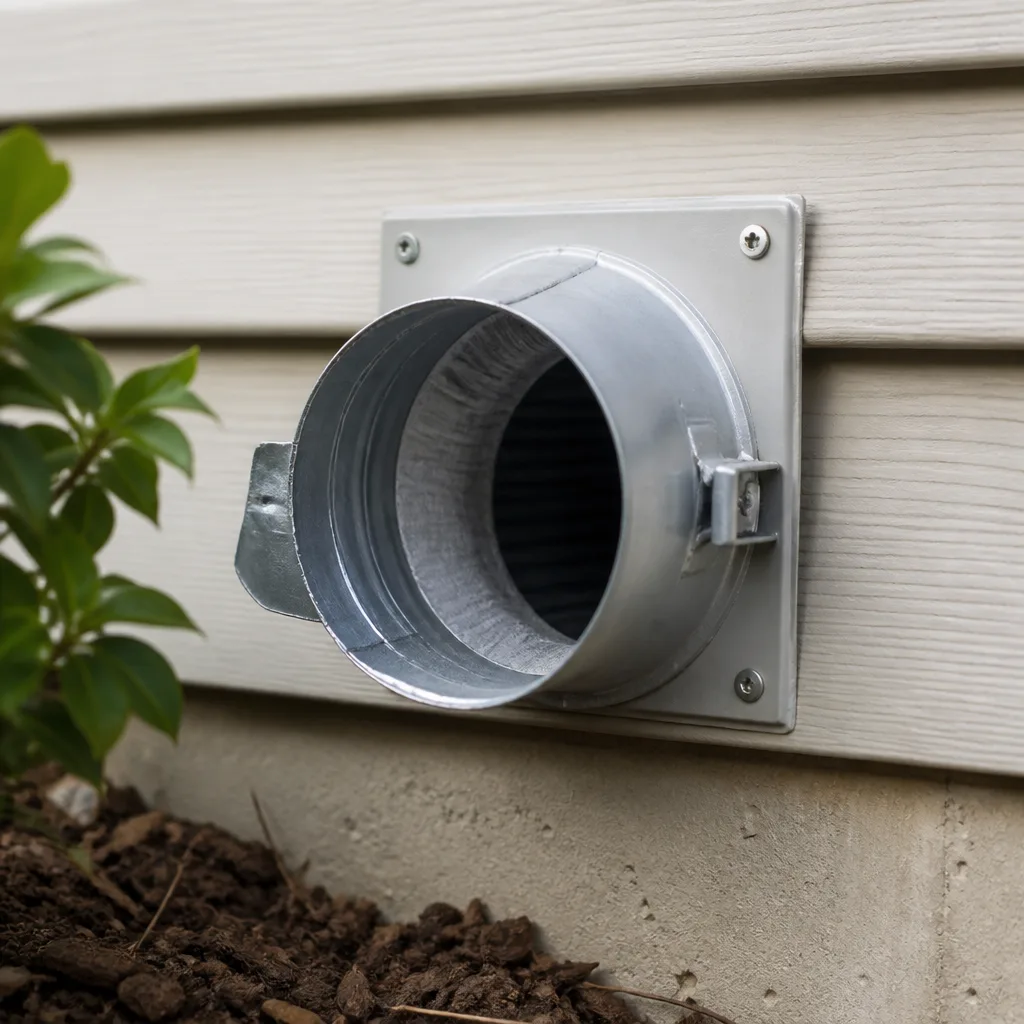 Dryer vent cleaning
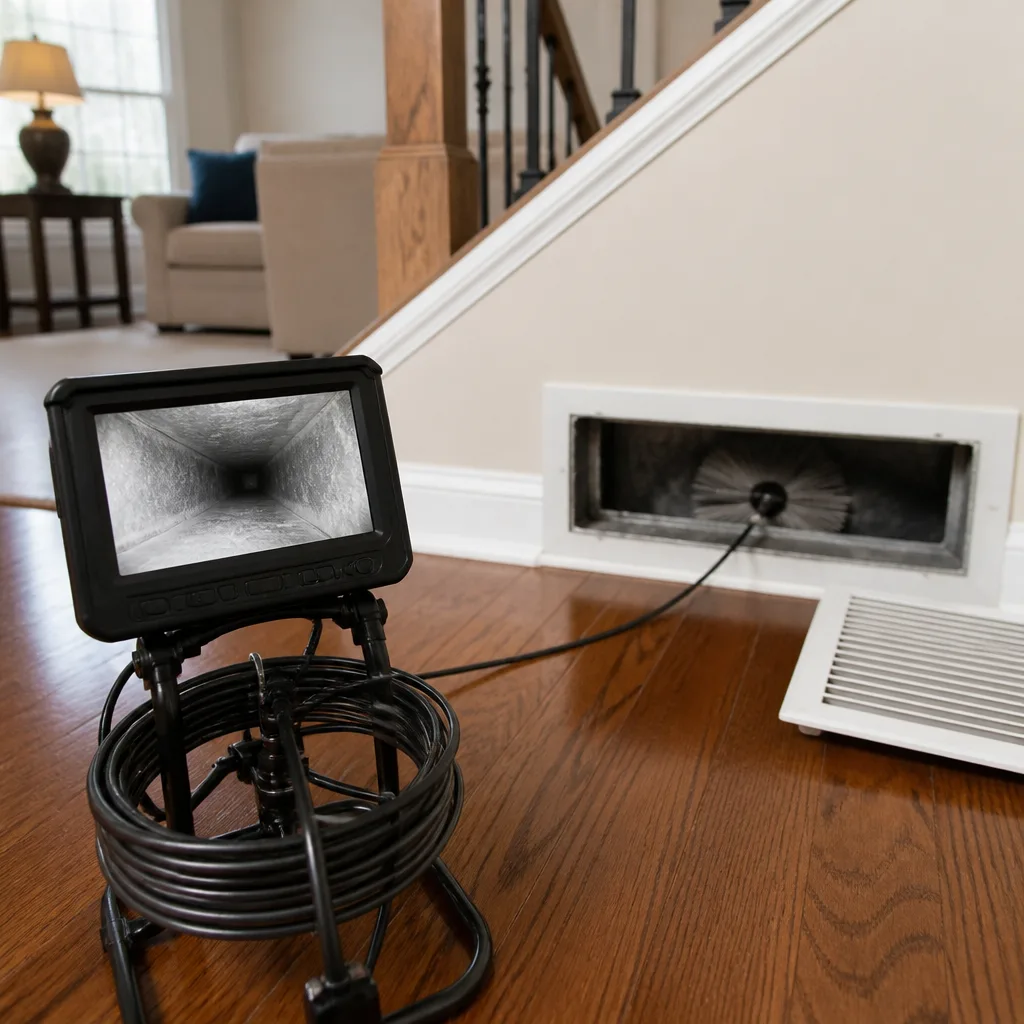 Camera inspection
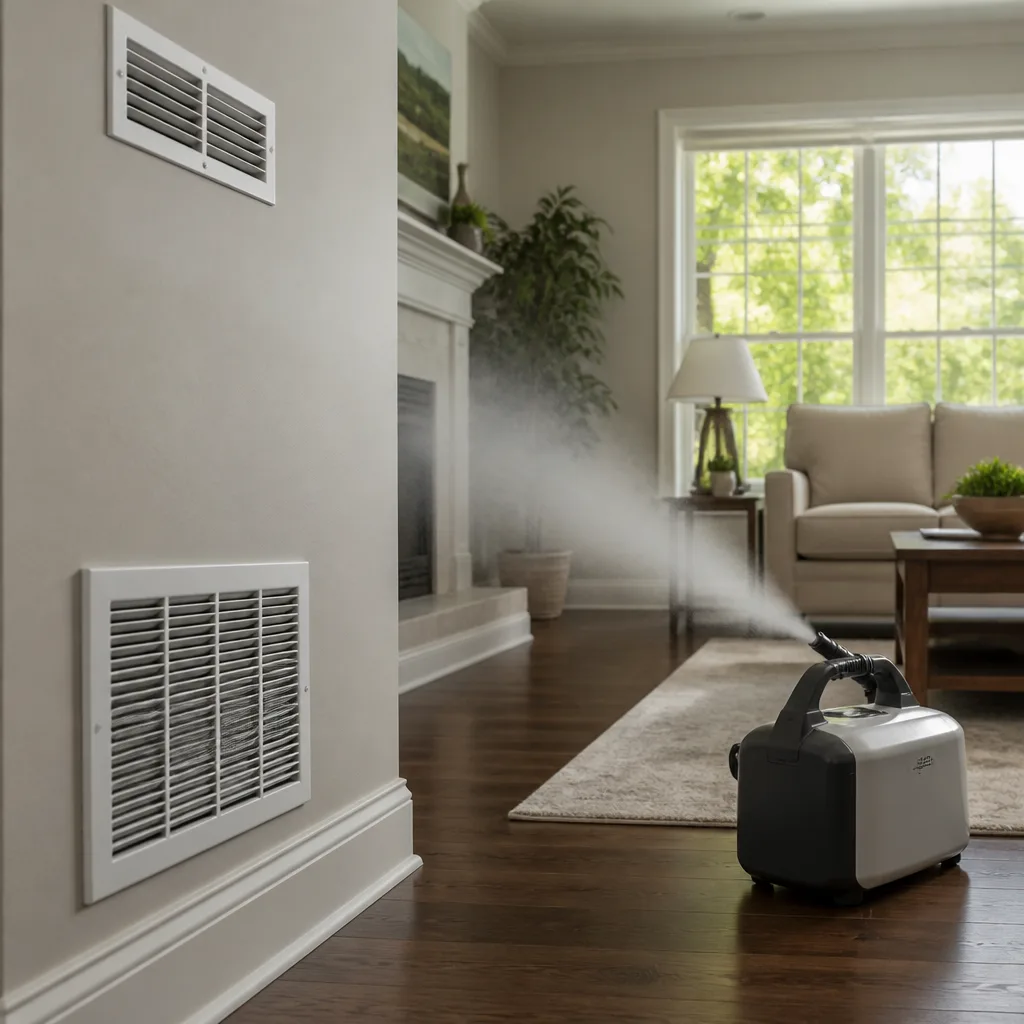 Sanitizing & deodorizing
Whole-system duct and dryer vent check with before-and-after photos - you see exactly what came out of your vents
That "$99 whole-house special" is a bait ad - the real number appears once they are in your hallway, or the "clean" is a shop-vac at the register. We photograph the inside of your ducts before and after instead.
Air Duct Cleaning Maintenance Schedule: What to Do and When
Ask five different people how often air ducts should be cleaned and you will get five different answers, most of them borrowed from a rule of thumb that was never about your house. The standard three-to-five-year interval gets repeated so often that homeowners treat it like a maintenance law, but it was written for a hypothetical average home with average dust, average pets, and average occupancy. A Downtown San Diego condo with a shedding dog, a 2023 kitchen remodel, and three years of marine-layer humidity cycles is nowhere near average. This guide replaces the generic timeline with something more useful: a decision-based schedule built around the triggers that actually dictate how fast your ducts foul.
Quick Answer
Clean your air ducts when a trigger says you need to, not when a calendar says so. For most Downtown San Diego homes, that works out to every 2 to 4 years depending on pets, occupancy, renovation history, and filter discipline; a few homes go longer, many homes with multiple pets or recent remodels need it sooner. The maintenance schedule that actually works combines a six-month visual check at your registers, filter changes based on the MERV rating you run, and a full cleaning triggered by specific events rather than elapsed time.
Styles & brands we work with
- Whole-home duct cleaning
- Dryer vent cleaning
- Camera inspection
- Sanitizing & deodorizing
Table of Contents
- Why Blanket Timelines Fail Downtown Homes
- The Trigger Matrix: Your Real Maintenance Schedule
- What Makes Downtown San Diego Dust Different
- The Baseline Report: Stop Guessing, Start Measuring
- Filter Maintenance and Duct Cleaning Are the Same System
- The 6-Month Self-Inspection Any Homeowner Can Do
- Common Mistakes to Avoid
- When to Call a Professional
- Frequently Asked Questions
Why Blanket Timelines Fail Downtown Homes
The three-to-five-year recommendation assumes a suburban house with moderate dust loading, a standard one-inch fiberglass filter, and no unusual particle sources. It does not account for what actually moves through the air in a dense urban core like Downtown San Diego. Gaslamp restaurant exhaust, East Village construction dust, brake dust from constant stop-and-go traffic on Market Street and Pacific Highway, and the fine particulate that rides the offshore marine layer all end up moving through your HVAC return. When we clean ducts in buildings that are only two to three years past their last service date, we routinely remove soils that would look normal in a five-year-old suburban system. The calendar did not change the rate of accumulation. Your building did.
There is a second reason blanket timelines fail: they train homeowners to defer action until a date arrives, even when visible evidence says the system already needs attention. If a return grille looks like a dryer lint screen after eight months, the date of your last cleaning is irrelevant. The better framework is conditional, not chronological.
What Actually Dictates Cleaning Frequency
- Pet load: One dog or two cats can cut the realistic interval roughly in half compared to a pet-free unit. Dander is fine, sticky, and accumulates fast on duct walls.
- Occupancy: A two-person household generates less skin cell and textile dust than a four-person household with kids. A live-in unit versus a vacation rental are completely different schedules.
- Renovation history: Any remodeling in the past five years, especially drywall work, flooring removal, or cabinet installation, means construction fines are in the system unless it was cleaned afterward.
- Filter discipline: The single largest variable you control. More on this below, because it can extend or collapse your cleaning interval dramatically.
- Water exposure: A plumbing leak, a window left open during rain, or a condensation issue near the air handler can introduce conditions that change the priority from cleaning to air duct cleaning plus inspection for microbial growth.
The Trigger Matrix: Your Real Maintenance Schedule
Stop asking “how long has it been” and start asking “what has happened since the last cleaning.” These triggers reset the clock regardless of when your ducts were last serviced. If any one of them applies to your home, it is time for a full cleaning even if your last one was only a year ago.
Immediate Triggers: Clean Within 30 Days
- Renovation or remodeling of any scope: Drywall sanding generates particles under 10 microns, which are small enough to stay suspended and get pulled deep into the system. Even a single-room renovation justifies a full cleaning afterward, not just a filter change.
- Water intrusion or visible mold: If you saw water near your air handler, smelled musty air from the vents when the blower runs, or found visible growth on any register, do not wait. This is a contamination-level scenario, not routine maintenance.
- A new allergy or asthma diagnosis in the household: The dust and particulate already in the ducts becomes a daily exposure source. Cleaning gives the diagnosis a fair baseline to manage from.
- Moving into a new home or condo: You have no documentation of what the previous residents did. We have cleaned systems in Downtown San Diego buildings that had never been serviced in a decade of prior occupancy.
Acceleration Triggers: Move Your Schedule Up by 1-2 Years
- Added a second pet: One pet is a factor. Two pets is a compound one. Dander accumulates in layers and sticks to what is already there.
- Converted a spare room to a home office or bedroom: More occupied hours per day means more skin cells, more textile fibers from clothing and bedding, and more activity stirring settled dust.
- Began using the HVAC more: If you previously relied on open windows and now run the system heavily during hot stretches or the marine-layer months, circulation hours directly track with dust deposition on duct surfaces.
- Any work done on the building itself: In multi-unit buildings, work on a neighboring unit can route construction dust through shared chase ways and plenum spaces. If the building did facade work, lobby renovation, or roof repair, your system may have taken on particles you never generated.
Standard Triggers: The Default Schedule When Everything Is Normal
If none of the above apply, here is the baseline for a typical Downtown San Diego home with average pet load, consistent filter changes, and no recent renovation:
- Every 4 to 5 years: One to two occupants, no pets, no carpeting, high-rise unit above the street-level dust zone, strict filter discipline.
- Every 3 to 4 years: Two to four occupants, one small pet, some carpeting, moderate filter discipline, building under ten years old.
- Every 2 to 3 years: Multiple pets, any carpeting, building over twenty years old, inconsistent filter changes, home renovation within the past five years.
- Every 1 to 2 years: Serious allergy or respiratory condition in the household, documented mold history, heavy construction nearby, or a system that already demonstrated rapid re-accumulation after the last cleaning.
What Makes Downtown San Diego Dust Different
The air in Downtown San Diego is not the same as the air in Clairemont or La Jolla. It is not even the same as the air ten blocks east. Three local factors change how ducts foul in this specific urban environment, and you will not find these in a generic national air duct guide.
Coastal Particulate and the Marine Layer
The offshore marine layer that sits over Downtown San Diego for months at a time is more than fog. It is a low cloud deck that holds fine particulate near ground level longer than it would stay in drier, inland air. That particulate includes sea spray mineral content, urban exhaust, and the fine dust from constant construction in the East Village corridor. The result is a sticky atmospheric film that settles onto every surface, including the inside of your return ducting. Homes in the Gaslamp Quarter and East Village see this more than units in the higher floors of newer towers, but every downtown building gets it.
Older Building Stock and Shared Chases
Many condominium and apartment buildings in Downtown San Diego date from the 1980s and 1990s. These buildings were constructed with mechanical chases and plenum spaces that were not as tightly sealed as modern passive-house standard construction. Dust from a hallway renovation, a lobby remodel, or even routine maintenance in a neighboring unit can migrate through common spaces into your duct runs. We see this pattern in older Gaslamp buildings regularly. Newer high-rises with sealed plenums are less affected, but few downtown buildings are new.
Construction Density and Brake Dust
Downtown San Diego has been under continuous construction for most of the past decade. East Village alone has cycled through dozens of ground-up builds and interior renovations. Construction dust is heavy, abrasive, and travels farther than most homeowners assume. Add brake dust from the stop-and-go traffic on the surface streets, and you have a particulate mix that loads additional fine metals and carbon into your building’s air intake. If your building has a common corridor with open-air entry doors, that street-level dust is coming inside every time the door opens.
The Baseline Report: Stop Guessing, Start Measuring
Most duct cleaning ends with a filter change and a handshake. That is a missed opportunity. The single most useful thing you can do for your long-term maintenance schedule is to establish a documented baseline the first time the ducts are actually clean. Without a baseline, every future recommendation is a guess.
A proper post-cleaning baseline report should document the following, so that a future technician, whether it is us or another company, can measure your actual accumulation rate rather than estimating it from national averages.
What a Baseline Inspection Report Should Include
- Post-cleaning photo documentation: Photos of the interior of the main supply trunk, a representative branch run, and the return plenum, taken with the system clean. These photos become the comparison point next time.
- Measured particle loading at the clean state: A simple visual assessment recorded in the report: what the duct walls look like immediately after cleaning, so the next inspection has a reference.
- Airflow measurement through each major register: Not required for maintenance, but useful. The clean-system airflow number is the health of the system, and a drop later can indicate buildup even before you can see it.
- Filter condition and type at the time of cleaning: Photo of the old filter before replacement, plus the type and MERV rating of the new one installed. This links the filter discussion to your actual data.
- Notes on any pre-existing conditions: Minor rust on a section of duct, a small gap at a seam, an area that showed unusual buildup. These notes tell the next technician where to look first.
With this report in hand, a technician returning in two or three years can say with confidence, “you accumulated X amount of visible soil in Y years under these filter and occupancy conditions,” instead of reciting a national average.
Filter Maintenance and Duct Cleaning Are the Same System
The filter is the first line of defense for the duct system. A MERV-8 fiberglass filter catches large particles but lets fine dust pass through to coat the duct walls. A MERV-11 filter catches significantly more of the fine fraction, which directly extends the interval between duct cleanings. But there is a catch that most filter marketing does not mention: higher MERV ratings increase static pressure.
MERV-11: The Practical Sweet Spot for Most Homes
For most residential systems in Downtown San Diego, a MERV-11 filter is the realistic upper end before you need to think about system static pressure. Honeywell and Aprilaire both make high-quality MERV-11 filter media designed to perform without starving a typical residential blower of airflow. If your system is older or your blower has not been upgraded, a MERV-13 filter may restrict airflow enough to reduce comfort and increase energy load. The extra filtration does not help if the air is not moving through it properly.
The Filter Schedule That Actually Works
- MERV-8 fiberglass (1-inch): Replace every 30 to 60 days. These load quickly and do little for fine dust, which means more frequent duct cleanings.
- MERV-11 pleated (1-inch): Replace every 60 to 90 days. This is the minimum we recommend for Downtown San Diego homes with pets or any allergy concern.
- MERV-11 pleated (4-inch media cabinet): Replace every 6 to 12 months, depending on the loading you see. A 4-inch Aprilaire media filter has much more surface area and lasts far longer than a 1-inch equivalent.
- MERV-13: Only if your system was designed or verified for it. If you are unsure, have the static pressure checked before stepping up.
The link between filter and duct cleaning is direct: every particle the filter catches is a particle that does not end up on your duct walls. Every particle the filter misses coats the system and shortens your interval. If you upgrade from MERV-8 to MERV-11 and keep the replacement schedule honest, you can realistically add one to two years to the interval between air duct cleaning services. That saves money over time and keeps the system performing closer to its clean baseline airflow.
The 6-Month Self-Inspection Any Homeowner Can Do
You do not need to call a professional every time you wonder if the ducts are getting dirty. A five-minute visual inspection twice a year will catch early buildup before it becomes a problem, and it will help you build your own record of how fast your specific home accumulates dust.
Step-by-Step: Inspect Your Registers and Returns
- Turn the system off: Do not do this with the blower running. You want to see what has settled, not what is airborne.
- Remove a supply register in a high-use room: Choose the room where you spend the most time. Slide the register out carefully; most are held by two screws or friction clips.
- Look at the interior of the boot and the first few inches of the run: Use a flashlight. You are looking for visible gray or brown dust accumulation on the walls of the duct. A light dusting is normal; a thick, felt-like coating is not.
- Check the return grille: The return is the dirtiest part of the visible system because it carries unfiltered air from the room to the filter. Remove the grille and look at the surface behind it. If it looks like a dusty window screen, that is your early indicator.
- Photograph what you see: Store the photos on your phone with the date. Six months later, take the same photos again. The comparison tells you your real accumulation rate.
- Wipe only the register and grille faces: You can clean the visible metal or plastic register faces with a damp cloth. Do not attempt to reach inside the duct runs with household tools, and do not use a shop vac to try to service your own ducts. Consumer vacuums do not have the reach or suction to do anything useful, and they can damage the duct liner. That said, removing surface dust from the register itself keeps the visible system clean between professional cleanings without much effort.
If the six-month comparison shows visible new buildup on the interior walls, that is the signal to schedule a professional cleaning. If the system looks essentially the same after six months, you are on a longer interval. Either way, you now have the data to make the call with confidence instead of guessing.
Common Mistakes to Avoid
- Treating the three-to-five-year rule as a law: It is a guideline for a home that does not exist. Downtown San Diego homes with pets, remodels, and marine-layer exposure routinely need cleaning sooner, and ignoring visible buildup because “it has only been three years” compounds the problem.
- Upgrading to a MERV-13 filter without checking system static pressure: Higher filtration is not free. An older blower may struggle against the added resistance, which reduces airflow and can shorten blower life. MERV-11 is the practical max for most homes without verification.
- Cleaning the ducts but skipping the dryer vent cleaning: They are separate systems with separate failure modes. A clean set of supply ducts does nothing for a dryer vent packed with lint, which is a documented fire hazard that builds on its own schedule.
- Assuming a new building has clean ducts: New construction means drywall dust, sawdust, and construction debris inside the ducts before you ever move in. A new build is a reason to clean, not a reason to skip it.
- Waiting until you can smell it: By the time musty or dusty smell is obvious when the blower runs, you have months or years of accumulated loading in the system and possibly the early stages of microbial growth in the evaporator coil. Smell is a late indicator, not an early one.
- Using a cheap internet coupon as your filter: A $99 whole-house duct cleaning uses consumer-grade equipment, not professional-grade tools. We use Rotobrush and Nikro systems, the same equipment restoration professionals rely on. Try to get the same result with a shop vac and a flyer coupon, and you will pay twice. Clean ducts. Repaired ducts. Better air.
When to Call a Professional
Call when a trigger fires. Call when your six-month self-inspection shows visible accumulation that did not exist at the last check. Call when the filter is loading in half its normal interval and you do not understand why. Call when you smell must when the blower runs. Call after any water event near the air handler, not next season. And call when you bought a unit in an older Gaslamp or East Village building with no service records.
Blackstone Air Duct Cleaning offers free estimates in Downtown San Diego. Call (866) 282-6412. We answer 24/7. Fast dispatch from 7am to 7pm, Sunday through Friday.
Frequently Asked Questions
Air ducts should be cleaned when a trigger says you need to, which for most Downtown San Diego homes means every 2 to 4 years depending on pets, occupancy, renovation history, and filter discipline. A pet-free high-rise unit with strict filter changes may go 4 to 5 years; a multi-pet home in an older Gaslamp building with inconsistent filters may need it every 1 to 2 years. Call (866) 282-6412 to discuss your specific home and get a free estimate.
Renovation or remodeling, water intrusion, visible mold, a new allergy diagnosis, moving into a previously owned home, or adding a second pet should all reset the clock regardless of when the ducts were last cleaned. Each of these changes the particulate load in the system enough that elapsed time no longer predicts duct condition.
Yes. The offshore marine layer holds fine particulate near ground level for longer periods than drier inland air, and that particulate is sticky. Over months of marine-layer weather, it settles on every surface, including the inside of return ducting. Downtown San Diego homes see more of this than homes further east, especially in buildings with older mechanical chases that are not tightly sealed.
No filter removes all particles, but upgrading from MERV-8 to MERV-11 will meaningfully reduce the fine dust that coats duct walls and can extend your cleaning interval by one to two years in many homes. Honeywell and Aprilaire both make appropriate MERV-11 media. Do not jump to MERV-13 without verifying your system can handle the added static pressure.
Ask for before-and-after photo documentation of the interior of the main supply trunk and return plenum, plus a written baseline report noting the condition of the system at the time of cleaning. Professional-grade equipment matters too. We use Rotobrush and Nikro systems, not consumer-grade vacuums, because duct cleaning is a mechanical process that requires real agitation and real extraction. One specialist for the full job: cleaning, repair, and air quality products handled in-house.
They are separate systems and run on separate schedules, but scheduling them together makes sense if you have not had either done recently. Your dryer vent is a fire risk waiting to happen; lint is the fuel source and the vent is the chimney. Dryer vent cleaning is a dedicated fire-prevention service, not an add-on. Call (866) 282-6412 to schedule both and get a free estimate.
The Bottom Line
The best air duct maintenance schedule is the one with your home’s actual inputs in it: pets, occupants, renovations, filter rating, and the local air quality that makes Downtown San Diego different from an inland suburb. Set a six-month inspection reminder on your phone, take photos each time, change the filter on an honest schedule, and call when the triggers say to. You will clean less often on guesswork and more often on evidence, and the air you breathe in between will be measurably better for it.
Written by the team at Blackstone Air Duct Cleaning, serving Downtown San Diego since 2018.
See the difference
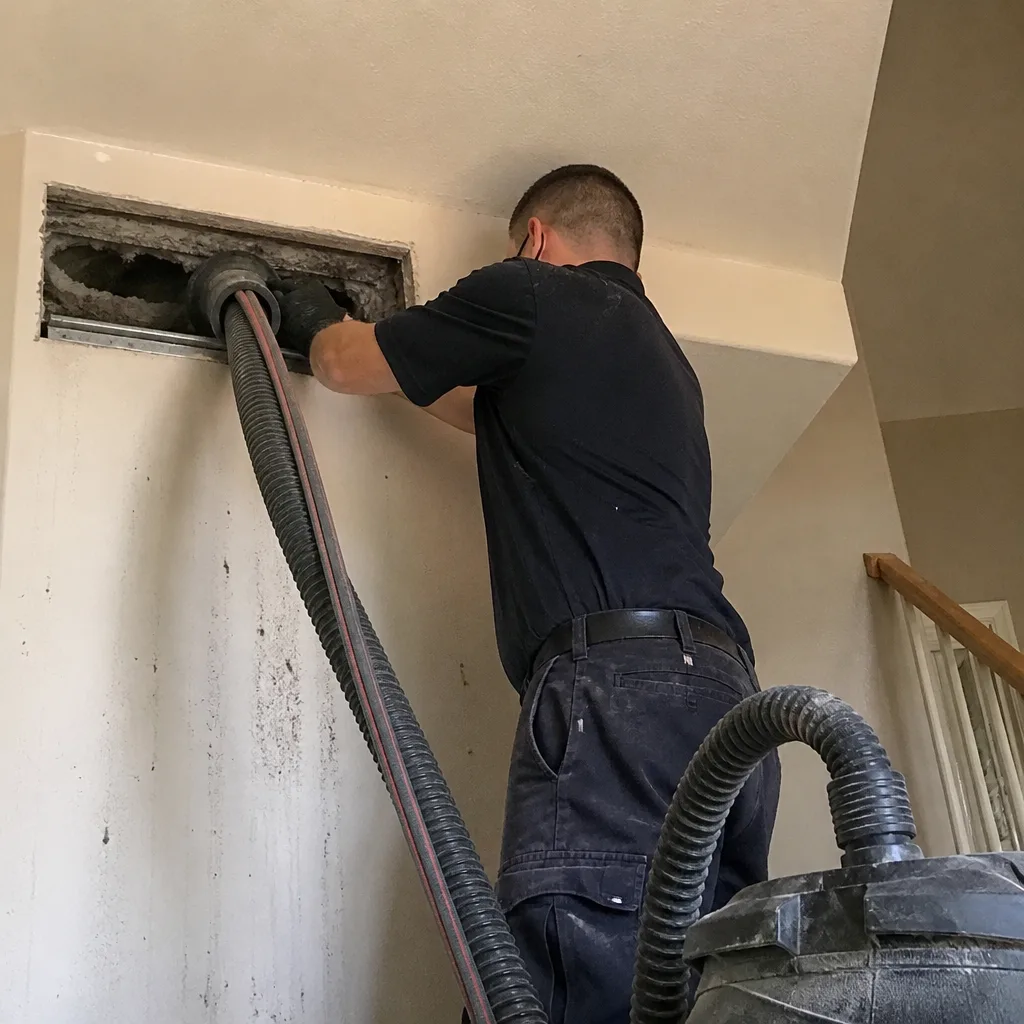 Before
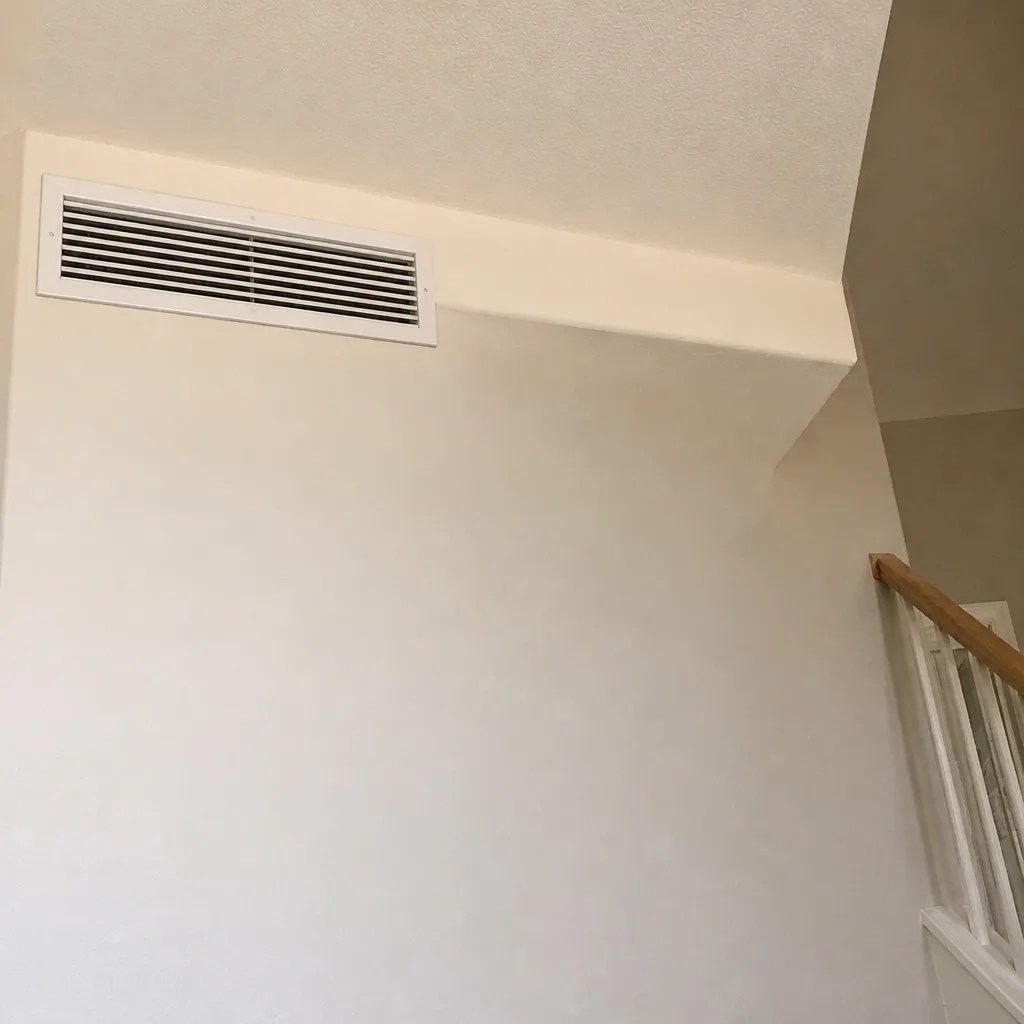 After
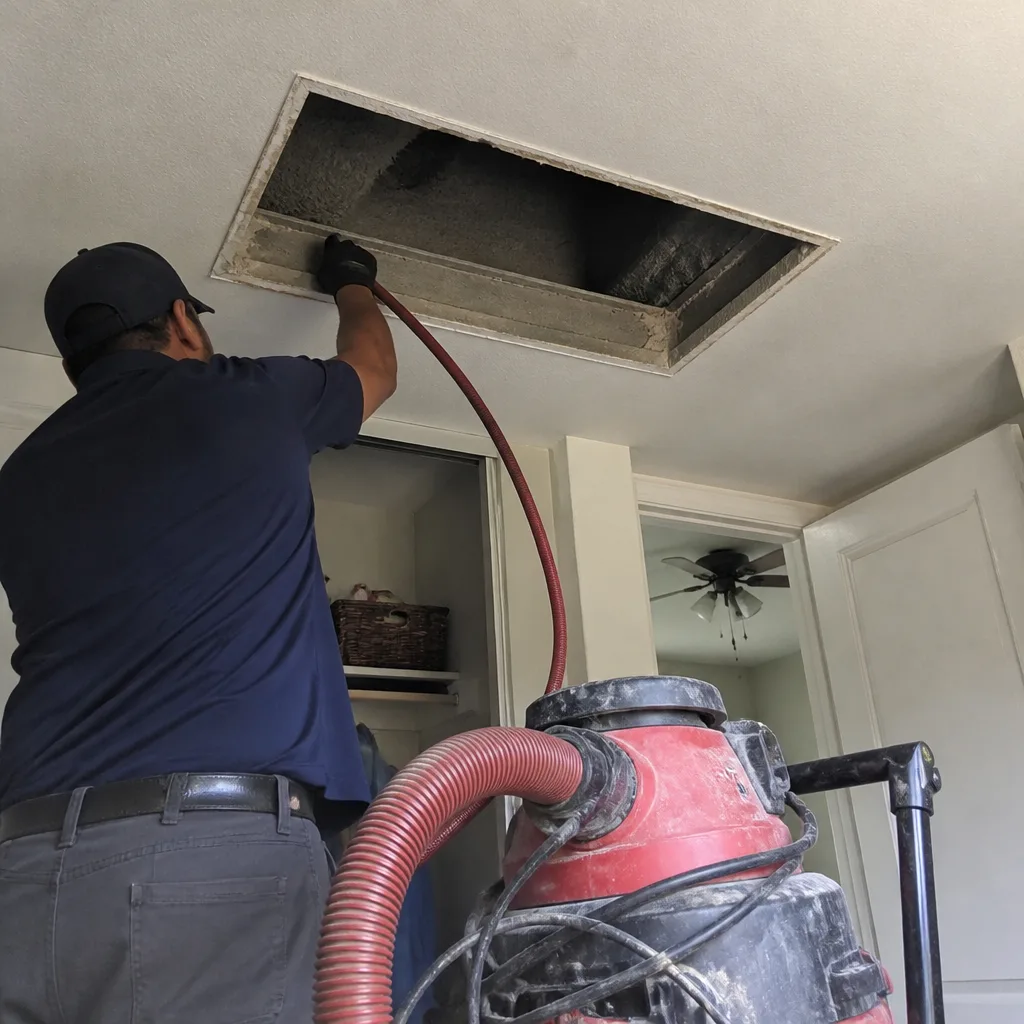 Before
 After
 Before
 After