
Last updated November 4, 2026
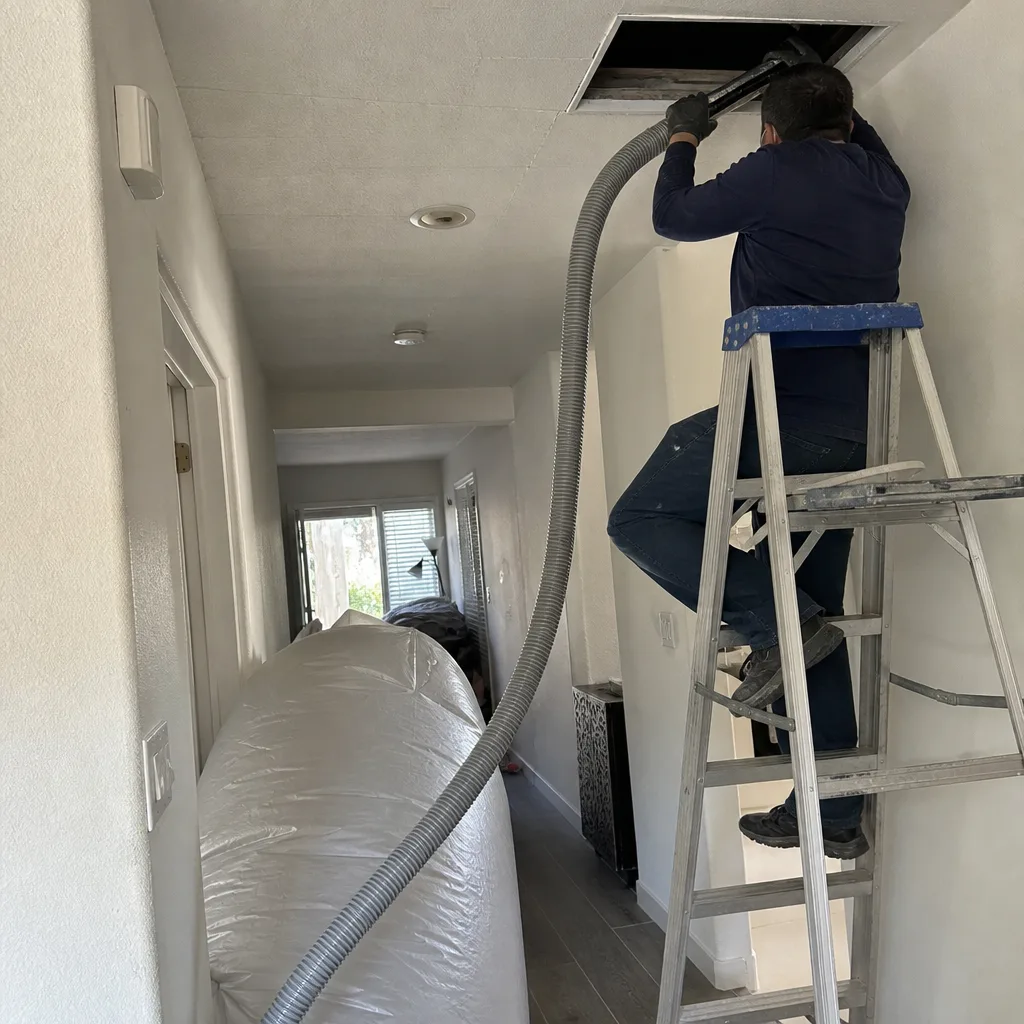
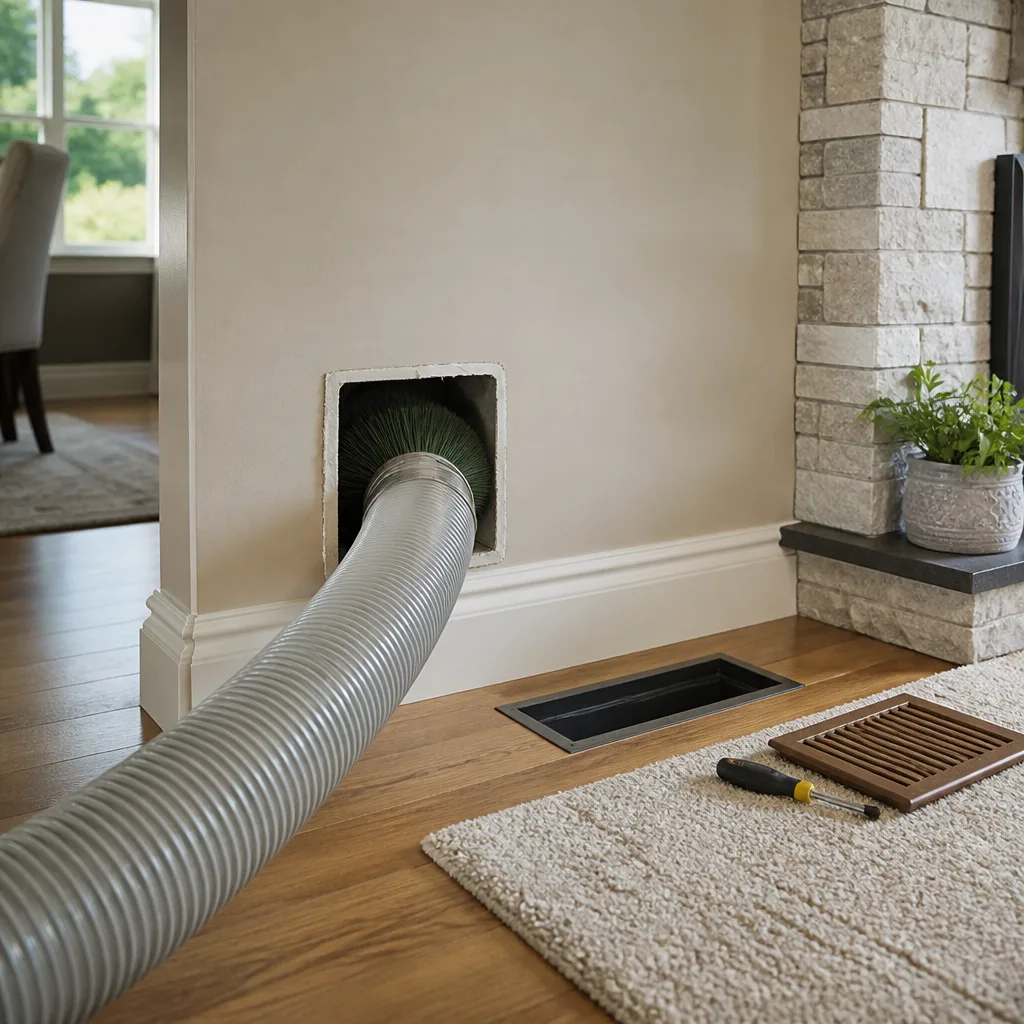 Whole-home duct cleaning
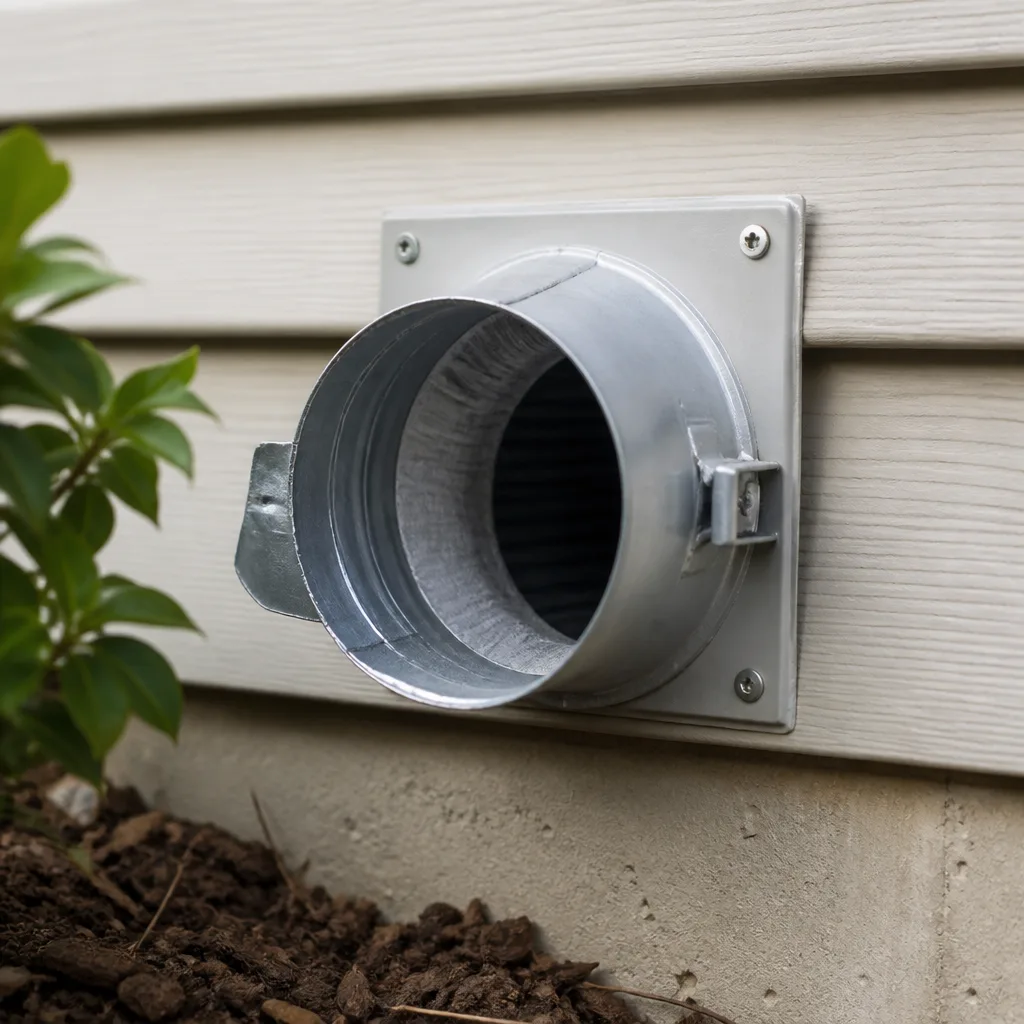 Dryer vent cleaning
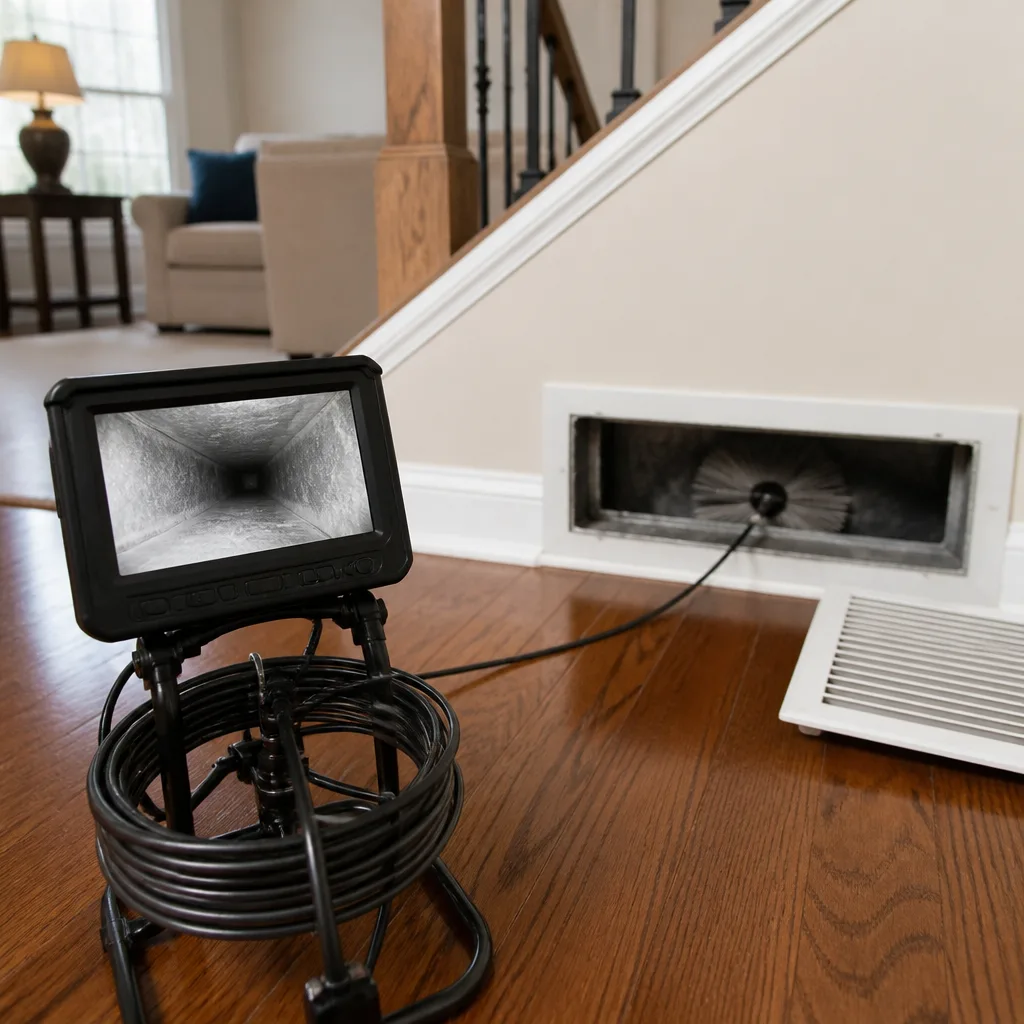 Camera inspection
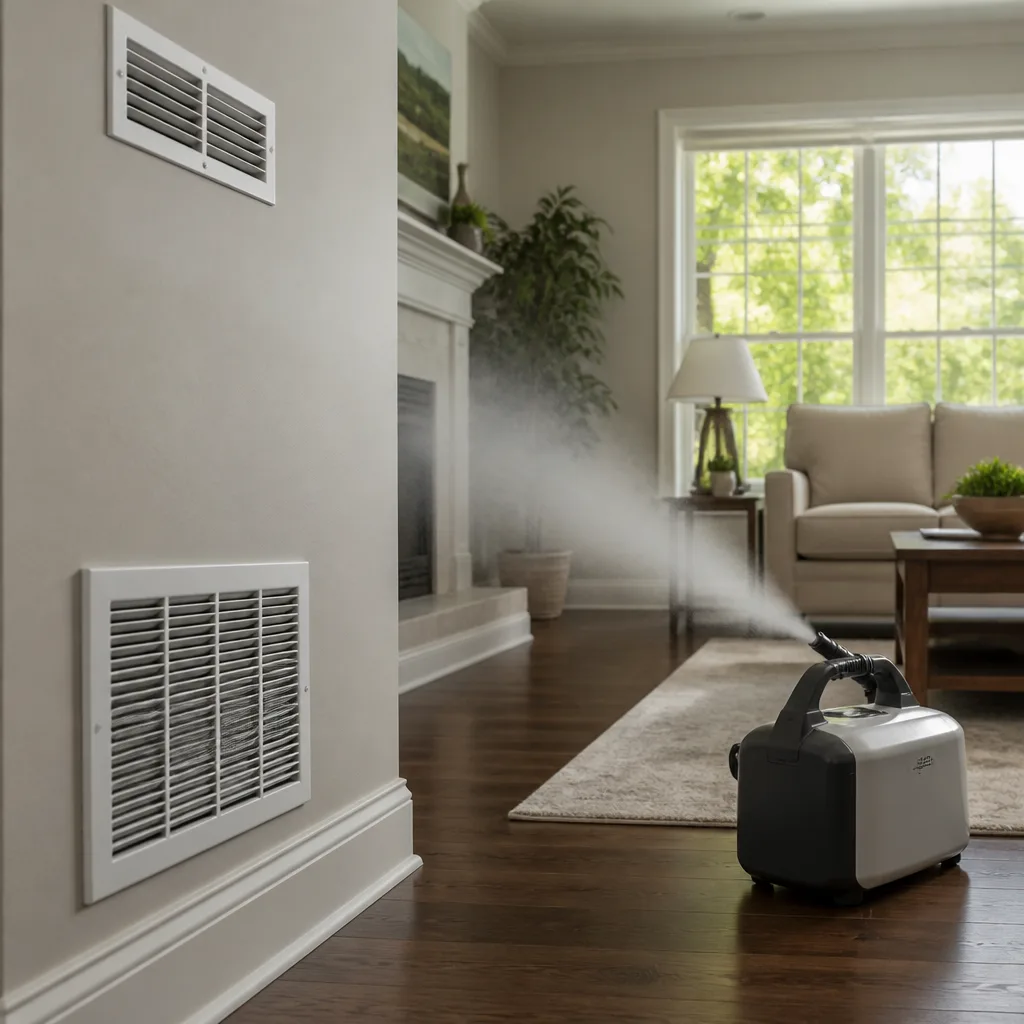 Sanitizing & deodorizing
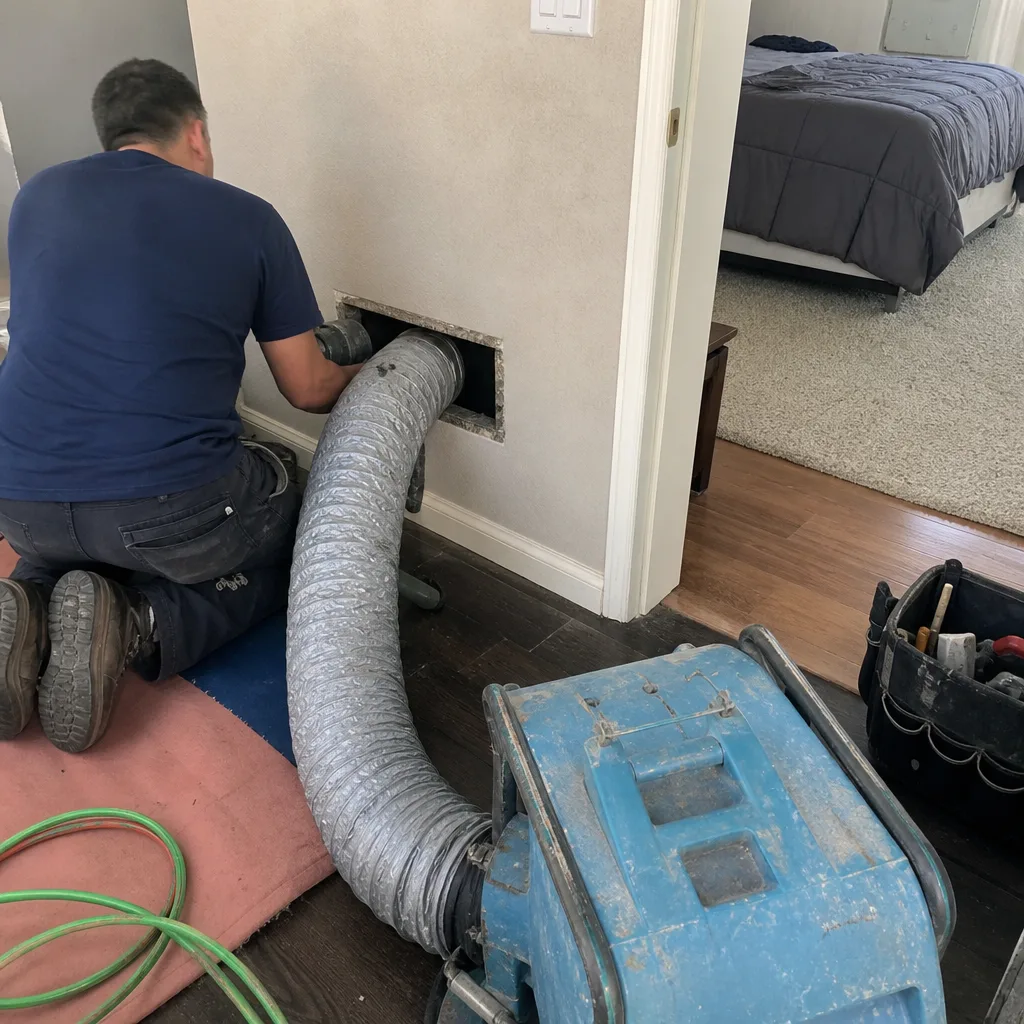
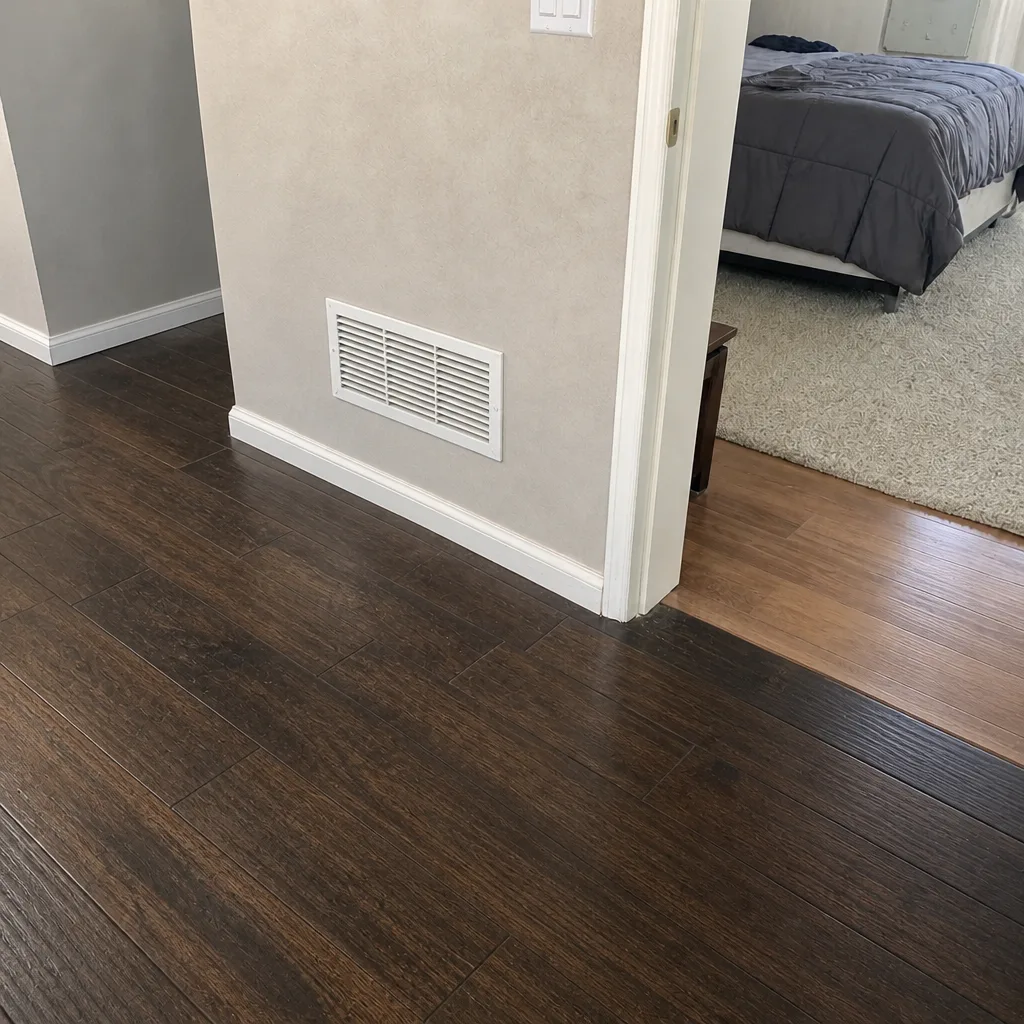
Whole-system duct and dryer vent check with before-and-after photos - you see exactly what came out of your vents
That "$99 whole-house special" is a bait ad - the real number appears once they are in your hallway, or the "clean" is a shop-vac at the register. We photograph the inside of your ducts before and after instead.
DIY vs Professional Air Duct Cleaning: The Downtown San Diego Homeowner’s Decision Guide
Most Downtown San Diego homeowners who attempt a DIY duct cleaning only touch the first foot of ductwork visible from each register. That sounds like progress, but those reachable inches represent perhaps 5% of the surface area inside a typical condominium or loft system. The other 95% – the main trunks, the returns, the plenums, the flex runs behind drywall – sits beyond the reach of any homeowner tool. This guide explains what you can actually access, what you cannot, and why the equipment gap matters more than your willingness to try. We’ll walk through the containment problem, the local building configurations that make DIY especially impractical in Downtown San Diego, and the realistic maintenance you can handle between professional cleanings.
Styles & brands we work with
- Whole-home duct cleaning
- Dryer vent cleaning
- Camera inspection
- Sanitizing & deodorizing
Quick Answer
For most Downtown San Diego homes, professional air duct cleaning is the only option that removes contamination rather than redistributing it. A homeowner can clean grilles, registers, and the first few inches of visible duct, but cannot generate the negative pressure needed to contain what gets dislodged or reach the main trunk lines where debris actually accumulates. If your system has flex duct, fiberglass-lined duct board, or runs through multiple floors of an older building, DIY is not a practical option. What you can do is meaningful maintenance between professional visits, which we cover below.
Table of Contents
- The Access Problem: What You Can and Cannot Reach
- The Containment Problem: Why Negative Pressure Changes Everything
- Why Downtown San Diego Building Configurations Make DIY Harder
- The Equipment Gap: Shop Vacs vs Rotobrush and Nikro Systems
- What Homeowners Can Legitimately Do Between Cleanings
- The Risk Calculation: When DIY Cleaning Spreads More Than It Removes
- Common Mistakes to Avoid
- When to Call a Professional
- Frequently Asked Questions
- The Bottom Line
The Access Problem: What You Can and Cannot Reach
A residential duct system is not a single pipe running from your HVAC unit to each room. It’s a branching network: a main supply trunk, a return trunk, smaller branch runs, and then the short connector sections that terminate at each supply register. The register itself unscrews in under a minute. Behind it, you’ll see a metal boot and perhaps the beginning of a branch line. That’s what a homeowner can reach with a brush kit and a shop vac hose. Depending on the building, that accessible section runs between 12 and 24 inches deep.
Everything beyond that first bend is untouchable without professional tools. The branch runs extend 10 to 20 feet through wall cavities and floor plenums. The main trunk can span the length of a hallway. The return side, which often carries the highest dust load, sits even farther from any register. In our experience cleaning systems across Downtown San Diego, the return side is consistently filthier than the supply side, and it’s also the side homeowners never see.
Flex duct, common in many residential systems, makes access even less realistic. A homeowner cannot push a brush through flex duct without tearing the inner liner or disconnecting a collar. Fiberglass-lined duct board, found in some older installations, gets damaged by rigid brush heads. These material realities are not skill limitations. They are physical constraints no amount of determination overcomes.
What a Homeowner Can Physically Access
- Supply and return registers: Removeable grilles that trap hair, dust, and surface debris. Cleaning them takes minutes and requires no special tools.
- Register boots: The metal or plastic transition piece directly behind each register. You can reach clean roughly the first 12 inches by hand.
- Visible duct openings: In some lofts and older Downtown San Diego units, short exposed duct sections sit in closets or utility areas where you can wipe the visible interior surface.
- Filter housing: The frame around your filter, which collects bypass dust and can be wiped clean during filter changes.
What Requires Professional Equipment
- Branch runs beyond the first bend: 10 to 20 feet of duct that cannot be seen or physically reached.
- Main supply and return trunks: The largest air-carrying channels, often running through soffits, bulkheads, or between floors.
- Return air chambers and plenums: Large open spaces where dust accumulates out of sight. These need negative pressure and agitation tools.
- The air handler cabinet and coil area: Where bypass dust settles on the blower wheel and coil fins, reducing efficiency and reintroducing particles into the air stream.
If your goal is a genuine improvement in indoor air quality, cleaning only the reachable 5% is like wiping the rim of a dirty glass and calling it washed. The contamination remains where it matters most.
The Containment Problem: Why Negative Pressure Changes Everything
Professional air duct cleaning is not suction in the way a shop vac provides suction. A professional system creates continuous negative pressure throughout the duct network while agitating the interior surfaces with rotating brushes or compressed air. The negative pressure does two jobs at once: it pulls dislodged debris toward the collection unit, and it prevents that debris from escaping into your living space through the registers.
When you push a brush into a register boot without negative pressure, you break the bond that holds dust and particulate to the duct wall. Some of it falls into your shop vac. The rest goes somewhere else: out of the boot and into the room, deeper into the branch line, or into the air stream the moment your HVAC system cycles on. For a homeowner with allergies or asthma in Downtown San Diego, that dispersion can make the air measurably worse the same day you tried to improve it.
Negative pressure containment is the defining difference between cleaning and relocating. Rotobrush systems, for example, combine a rotary brush head with a vacuum hose that runs directly behind the agitation point. The brush knocks debris loose in one direction, and the vacuum captures it before it can move anywhere else. Nikro equipment operates on the same containment principle, using high-volume negative air machines connected to the main trunk while technicians work the branch lines with specialized tools. This is the same approach used in restoration work after a fire or flood, where controlling the spread of particulate is non-negotiable.
A shop vac generates enough suction to pull visible dust bunnies from a register boot. It does not generate the airflow volume needed to maintain negative pressure across an entire duct network. The moment you open a register while the system is not sealed, air takes the path of least resistance. Debris drifts. The problem moves around the system instead of leaving it.
Why Downtown San Diego Building Configurations Make DIY Harder
Downtown San Diego housing stock runs from converted warehouse lofts in the East Village to high-rise condominiums above street-level retail, with a scattering of older Craftsman homes in Sherman Heights and Golden Hill. None of these configurations make DIY duct cleaning easier, and several make it genuinely hazardous.
Units above the second floor in older buildings present a practical obstacle: the main ducts run through fire-rated chases and concrete slabs, far from any register a resident can open. You might clean the boot in your living room and remain completely unaware that the return trunk serving your unit carries years of accumulated dust from the building’s shared air path. In a high-rise, you may share a vertical return chase with other units, and the section you can reach is a fraction of the total air path serving your space.
Flex duct is standard in many condominium units because it routes around structural obstacles more easily than rigid metal. That flexibility has a downside: the inner liner is a thin plastic film with a spiral wire coil. A homeowner who pushes a brush or rod into a flex run risks tearing the liner, which then leaks conditioned air into wall cavities and pulls insulation dust back into the air stream. Repairing that tear requires cutting open a wall or ceiling, which turns a weekend project into a structural repair.
Fiberglass-lined duct board appears in some older Downtown San Diego buildings. The fiberglass interior traps dust differently than smooth metal, and it is easily gouged by stiff bristles. A damaged liner releases fiberglass fibers into the air stream, which is worse than the dust you were trying to remove. We treat fiberglass-lined systems with controlled agitation methods that do not shred the liner, and we recommend professional handling for any system of this type.
The local climate also plays a role. San Diego’s mild weather and low rainfall mean windows are often open, which reduces indoor humidity but increases the amount of ambient dust and street particulates entering through window screens. Downtown traffic, construction activity, and the constant pedestrian churn produce fine dust that enters your home and eventually your ducts. Mild winters mean HVAC systems run intermittently year-round rather than seasonally, so dust circulates continuously instead of settling during an off-season.
The Equipment Gap: Shop Vacs vs Rotobrush and Nikro Systems
A consumer shop vac produces high static pressure but low air volume. That’s excellent for picking up a pile of sawdust on a concrete floor. It’s poor for cleaning a duct, which requires moving a large volume of air through a long, narrow channel. Professional duct cleaning equipment inverts the priority: high airflow volume at lower static pressure, which is what actually carries dislodged particulate out of the system and into a collection bag or HEPA-filtered waste container.
Rotobrush systems pair that high-volume vacuum with a rotating brush head on a flexible shaft. The brush scrubs the duct walls while traveling through the run, and the vacuum captures material right at the contact point. This combination of agitation and immediate capture is what allows professional cleaning to remove the adhered dust film that a brush alone cannot dislodge. The same principle applies to the rotary brush attachments used with Nikro equipment: agitation plus containment, working together.
These are the systems restoration professionals bring into a building after a flood, fire, or construction event, when air quality is compromised and the stakes are clear. Blackstone Air Duct Cleaning runs the same Rotobrush and Nikro equipment on routine residential jobs, which means a standard cleaning gets restoration-grade containment. That distinction matters in Downtown San Diego, where construction dust from neighboring renovations frequently migrates through shared walls and plenum spaces.
For elevated contamination scenarios – mold in the ductwork, heavy post-construction debris, or a system that has been untouched for years in a building with known indoor air quality issues – we also work with Abatement Technologies equipment. Abatement builds negative air machines and containment systems designed for remediation work. Their tools allow us to isolate a contaminated system, keep it under negative pressure, and clean it without cross-contaminating the rest of the unit. That capability goes well beyond what any homeowner tool can approximate.
What Professional Equipment Brings That DIY Equipment Cannot
- System-wide negative pressure: A sealed connection at the main trunk with airflow volume high enough to hold the entire network under negative pressure during agitation.
- Remote-controlled agitation: Rotating brush heads and air whips that travel through branch runs, breaking adhered debris loose at the point of contact rather than at the register.
- HEPA-filtered collection: Captured particulate stays captured. It does not vent back into the unit through an exhausted shop vac filter.
- Inspection capability: Access ports cut professionally allow camera inspection of post-cleaning results, so you can see what was removed and confirm the work was done. No guesswork.
- Material-appropriate tools: Different agitation methods for metal duct, flex duct, and fiberglass-lined duct, selected to clean without damaging the system.
What Homeowners Can Legitimately Do Between Cleanings
The honest answer for a Downtown San Diego homeowner is that between professional cleanings, your job is maintenance, not remediation. You can manage the surfaces you touch, replace the media that captures airborne dust, and monitor for signs that a professional cleaning is overdue. None of this requires tools beyond a screwdriver, a vacuum with a brush attachment, and a fresh filter.
A Realistic Homeowner Maintenance Routine
- Clean registers and grilles every 60 to 90 days. Remove each register, wipe it down with a damp cloth, and vacuum the visible interior of the boot. In Downtown San Diego, street dust and traffic particulates settle on registers faster than you’d expect, especially in units with operable windows facing busy corridors.
- Replace your HVAC filter on schedule. In a mild climate with year-round HVAC operation, most systems need a new filter every 60 to 90 days. Pet hair, construction dust, and the fine particulate that drifts through open windows all shorten filter life. Check monthly and swap early if the filter is visibly loaded.
- Vacuum around the filter housing. Remove the old filter and vacuum the frame area before inserting the replacement. Dust bypasses the filter at the edges, which means the housing itself becomes a source of particulate that re-enters the air stream.
- Watch the return side. If your return grille accumulates a visible dust mat between monthly cleanings, your system is pulling more particulate than a standard filter can handle. That is a signal, not a problem you solve with more frequent register cleaning.
- Keep floor registers clear. Furniture, rugs, and stored items over floor registers reduce airflow, which increases dust settling inside the duct run and strains the blower. In small Downtown San Diego units, furniture placement often blocks a register without the occupant noticing.
These tasks are genuinely useful. They reduce the visible dust in your unit and extend the benefit of a professional cleaning. What they do not do is clean the duct system. You are maintaining the accessible surfaces, not the inaccessible ones where the bulk of contamination lives.
The Risk Calculation: When DIY Cleaning Spreads More Than It Removes
There is a realistic scenario where leaving your ducts alone is safer than attempting a DIY cleaning. That scenario is any system with known or suspected contamination: visible mold on register surfaces, a history of water intrusion, rodent activity, or heavy construction dust following a renovation. In these cases, agitating the contamination without proper containment can aerosolize mold spores, rodent allergens, or silica dust throughout your living space.
The math matters here. A professional cleaning creates a controlled environment: the duct system is sealed, negative pressure holds every particle in the air stream, and contaminated material leaves the unit in a sealed HEPA-filtered collection system. A homeowner with a brush and a shop vac creates an uncontrolled environment: the moment you move that brush against a contaminated surface, particles release into air that is not being pulled toward a capture point. Some enters the vacuum. The rest enters your living room.
For a household with a family member who has asthma, allergies, or a compromised immune system, that dispersion risk is not theoretical. The same particles that would have been contained and removed by professional air duct cleaning instead circulate at breathing height for hours. We have seen systems where an aggressive but amateur cleaning attempt turned a localized issue into a whole-unit air quality complaint. The correct approach for a contaminated system is to leave it undisturbed until a professional can clean it under negative pressure containment.
There is a second risk that gets less attention: damaging the duct system itself. A torn flex duct liner, a punctured fiberglass liner, or a disconnected register boot creates air leaks that reduce HVAC efficiency and pull unconditioned air from wall cavities. In a Downtown San Diego high-rise, that leak path may include building materials, insulation fibers, and whatever lives inside the shared wall chase. The repair for that damage typically costs more than the professional cleaning would have in the first place.
Scenarios Where DIY Cleaning Is Not Viable
- Flex duct systems: The inner liner tears easily. Brushes designed for metal duct destroy flex duct.
- Fiberglass-lined duct board: Stiff bristles gouge the liner and release fiberglass fibers into the air stream.
- Systems above the second floor: Main trunks run through fire-rated chases and concrete where no homeowner can reach them.
- Contaminated systems: Any sign of mold, rodent activity, or heavy construction debris means agitation without containment is dangerous.
- Systems in older Downtown San Diego buildings: Unknown duct materials, shared return chases, and decades of accumulated debris require professional inspection before any cleaning method is chosen.
Common Mistakes to Avoid
- Treating a shop vac as a duct cleaning tool. A shop vac provides high static pressure and low air volume. Duct cleaning requires high air volume with controlled containment. The tool is simply not designed for the job.
- Pushing a brush into flex duct. Flex duct liner tears under rigid brush pressure, and the tear will not be visible. The first sign of damage is often reduced airflow or a jump in the electric bill months later.
- Assuming registers equal ducts. Cleaning the visible register boot is useful maintenance. It is not system cleaning. The main trunks, branch runs, and return side remain untouched.
- Using chemical foggers or disinfectant sprays inside ductwork. Introducing chemicals into an unsealed duct system means those volatile compounds circulate through your living space. Some products also damage flex duct liners or duct board. Professional products like Guardsman protective treatments are applied in controlled conditions as part of a service scope, not sprayed blindly into a register from a can.
- Ignoring the return side. In most Downtown San Diego units, the return side carries the heaviest dust load. Homeowners focus on supply registers and leave the return untouched for years.
- Waiting until the system smells. Odor is a late-stage indicator. By the time you smell mustiness or stale dust in the air stream, the contamination is well established and has been circulating for months.
- Choosing a cleaner based on the lowest quote. Duct cleaning is an equipment-dependent service. A low quote reflects consumer-grade tools and limited containment. What looks like a bargain often agitates but does not remove, leaving you with dispersed dust and the same problem.
When to Call a Professional
Call a professional when the accessible maintenance is done and the system still shows signs of contamination: visible dust at the registers within weeks of cleaning them, reduced airflow, stale odor when the blower cycles, or household allergy symptoms that improve when you leave the unit. Call before you attempt anything disruptive if your system uses flex duct, fiberglass-lined duct board, or runs through multiple floors of an older building. And call immediately if you see mold on register surfaces, evidence of rodent activity, or dust so heavy it has formed a visible film inside the duct you can see.
Blackstone Air Duct Cleaning offers free estimates in Downtown San Diego. We inspect the system, explain what we found, and set one flat price per system before any work begins. Call (866) 282-6412. We answer 24/7. Fast dispatch from 7am to 7pm, Sunday through Friday.
Frequently Asked Questions
You can clean the first foot of visible ductwork at each register with a shop vac, but that represents a small fraction of the total system surface area. A shop vac lacks the air volume and containment capability to clean main trunks, branch runs, or the return side, which is where most contamination accumulates in Downtown San Diego homes. Professional systems use negative pressure and rotary agitation tools to clean and contain simultaneously.
Professional air duct cleaning removes the adhered dust, construction debris, and particulate that sits in the duct system beyond your reach, using equipment that contains what it dislodges rather than dispersing it into your living space. For Downtown San Diego units with year-round HVAC use, open windows, and construction dust from neighboring renovations, the benefit is measurable in cleaner indoor air and a system that runs more efficiently. The estimate sets the final price, so you know the cost before work begins.
Look at the return registers and the filter housing. If the return grille accumulates a visible dust mat within a few weeks of cleaning, your system is moving more particulate than standard filtration can handle. If your HVAC filter is loaded well before its rated lifespan, dust is bypassing the filter and settling in the duct system. Visible dust inside the register boot, stale airflow, and allergy symptoms that fade when you leave the unit are all signs the system needs professional attention.
Cheaper quotes usually reflect consumer-grade equipment and limited containment. A company running a shop-vac-style system out of a van cannot generate the negative pressure needed to contain dislodged debris, so they may agitate dust without fully removing it. Professional-grade systems like Rotobrush and Nikro equipment cost more to operate and maintain, and that shows up in the quote. You are paying for equipment that actually removes contamination rather than redistributing it.
Air duct cleaning in Downtown San Diego is priced per system by written estimate, not per vent. Pricing depends on the number of units, the system size, the duct material, and the level of contamination. One flat price per system is agreed before work starts, which means no per-register additions and no surprise invoice at the end of the job. Call (866) 282-6412 for a free estimate.
Yes. High-rise units present access challenges because main trunks run through fire-rated chases and slab penetrations, but professional duct cleaning equipment is designed for those configurations. We inspect the accessible portions of the system, clean what the equipment can reach from the unit side, and explain any limitations imposed by the building’s construction. The same equipment and containment principles apply whether you are on the second floor or the twentieth.
Maintain the accessible surfaces: clean registers and grilles every 60 to 90 days, replace your HVAC filter on schedule, vacuum the filter housing with each change, and keep floor registers clear of furniture and rugs. In Downtown San Diego, where HVAC systems run year-round and open windows admit street dust, this routine maintenance extends the benefit of a professional cleaning and keeps visible dust under control. It does not replace professional cleaning, but it does keep the system healthier between visits.
The Bottom Line
The DIY versus professional question for air duct cleaning is not about how capable you are. It’s about access and equipment. You can reach the first foot of ductwork behind each register. You cannot reach the main trunks, branch runs, or return side where contamination actually accumulates. You can buy a brush kit. You cannot buy the negative pressure containment system that prevents dislodged debris from dispersing into your living room. In most Downtown San Diego homes, those two facts settle the matter. Maintain what you can reach, filter what you can filter, and bring in professional equipment for the rest. Your indoor air is only as clean as the system that delivers it.
Written by the team at Blackstone Air Duct Cleaning, serving Downtown San Diego since 2018.
See the difference
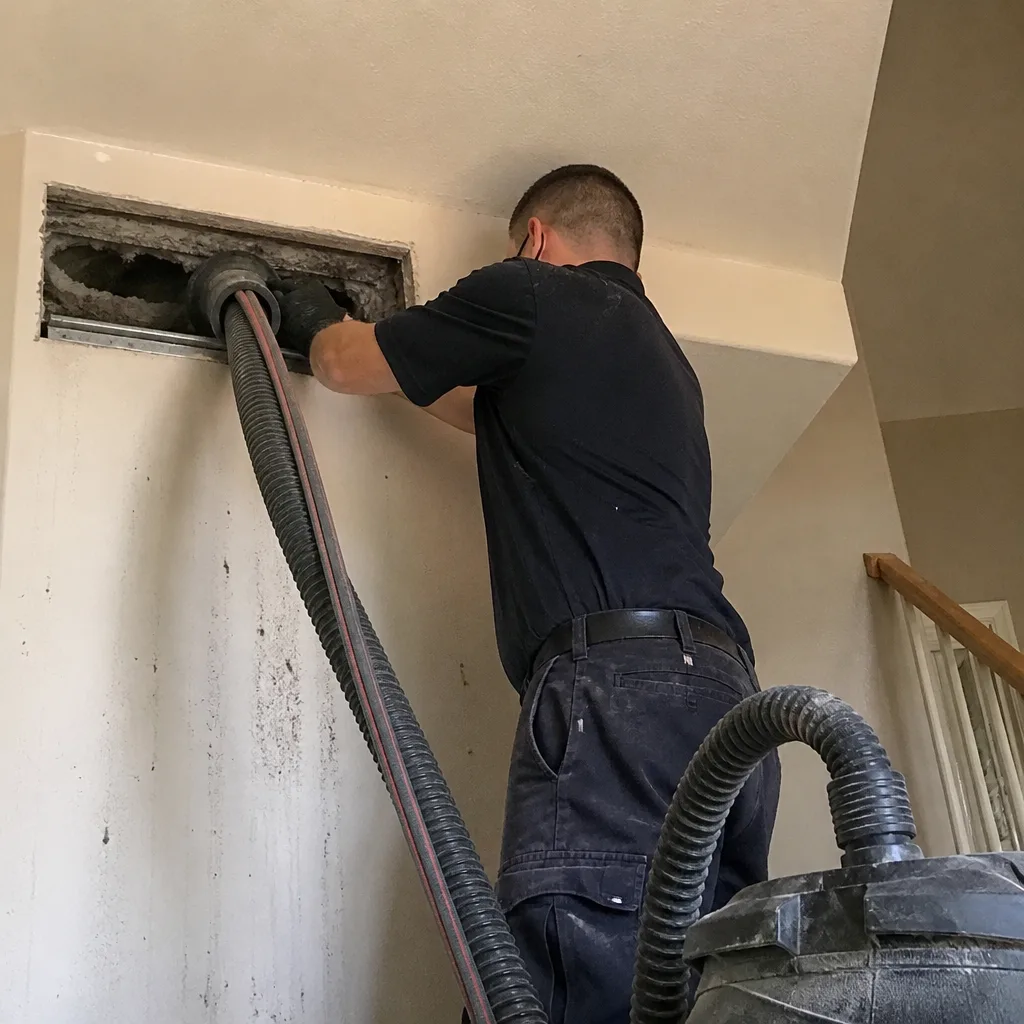 Before
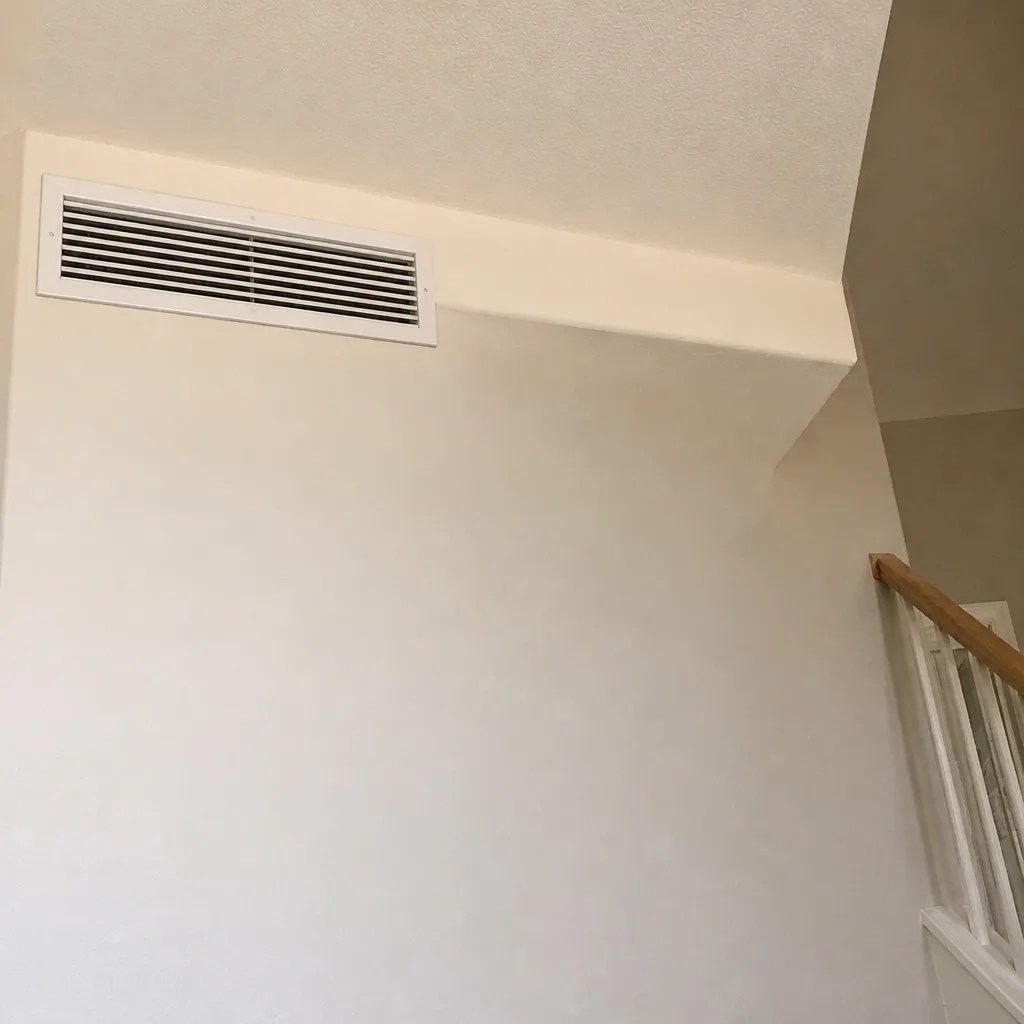 After
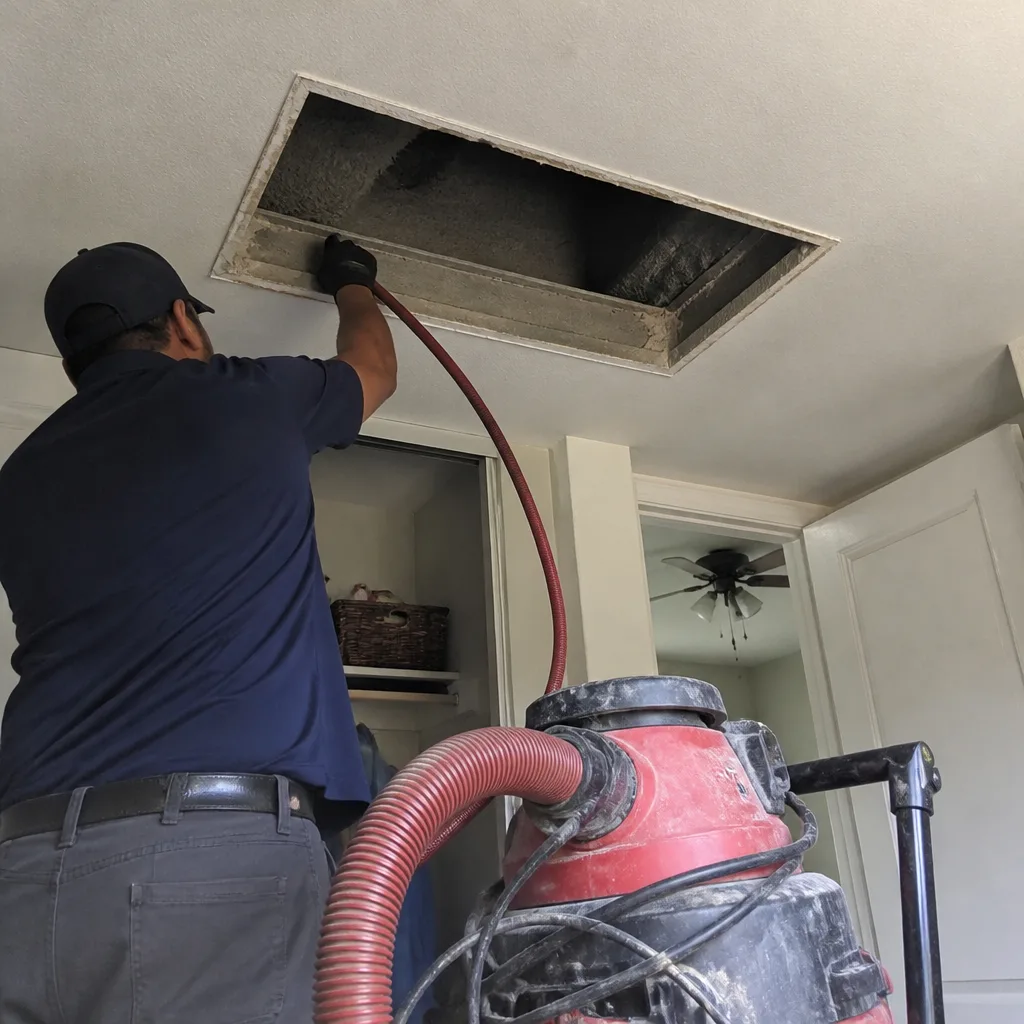 Before
 After
 Before
 After