
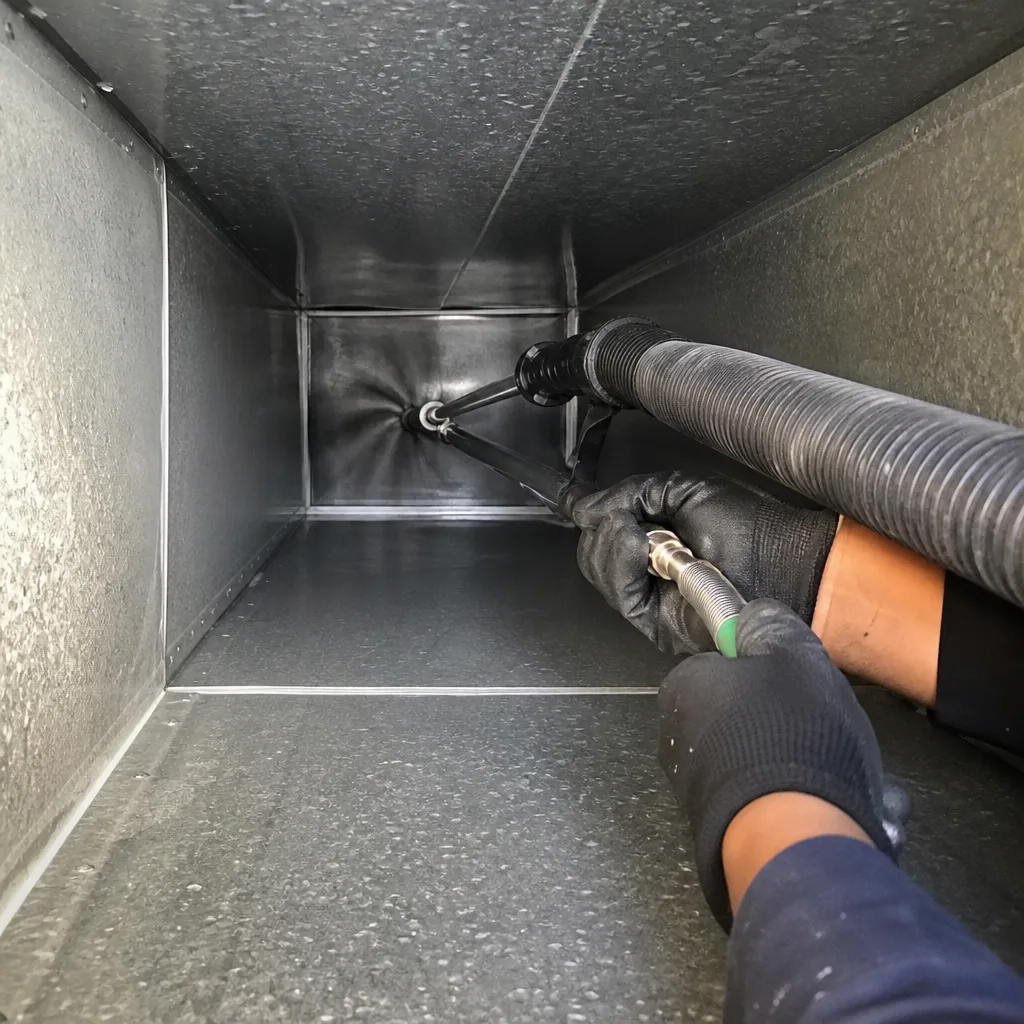
Last updated November 4, 2026
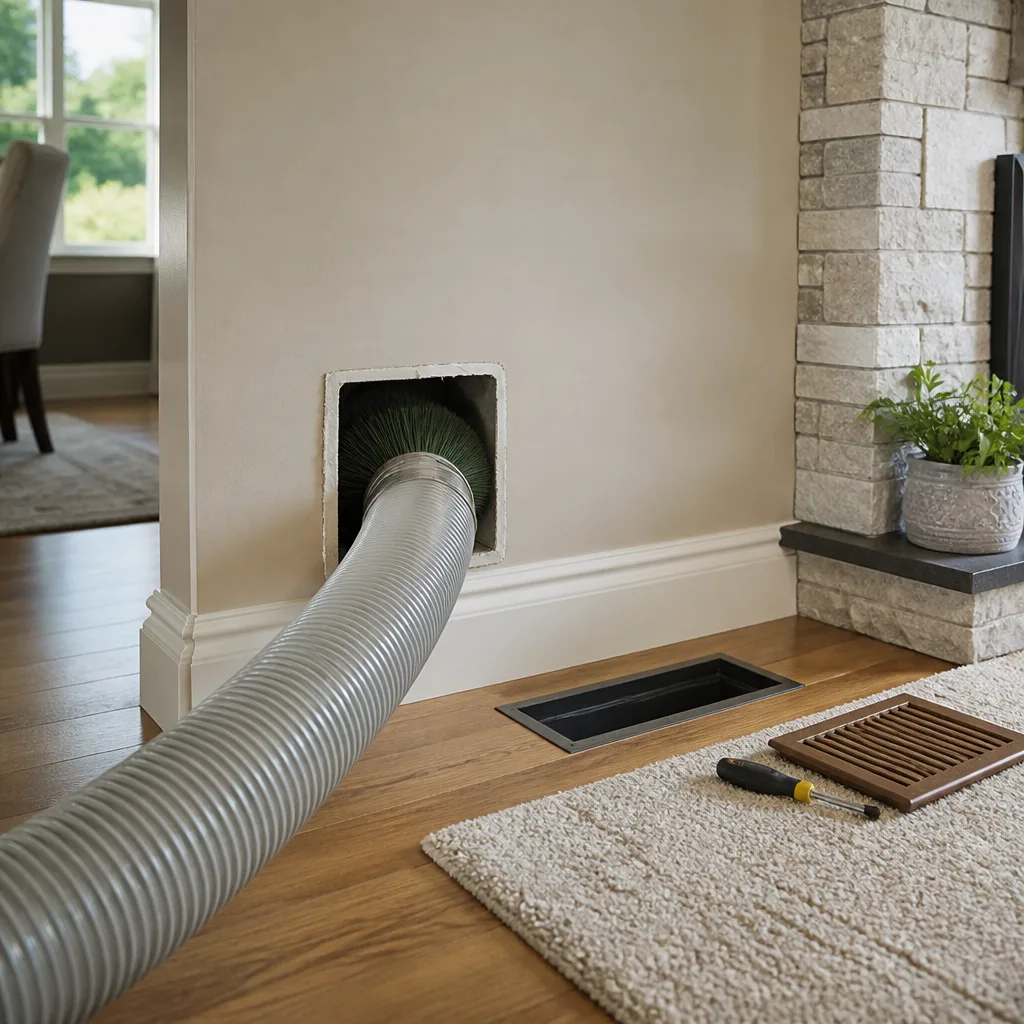 Whole-home duct cleaning
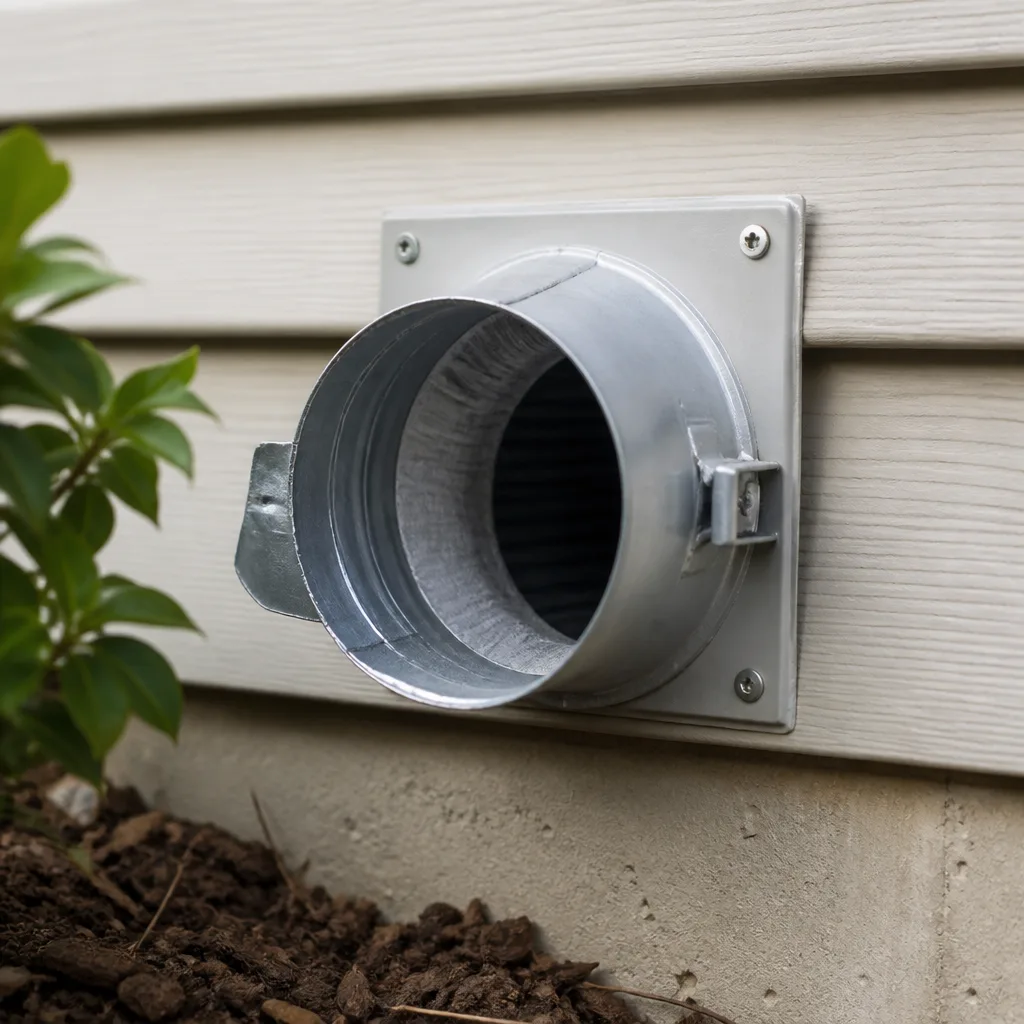 Dryer vent cleaning
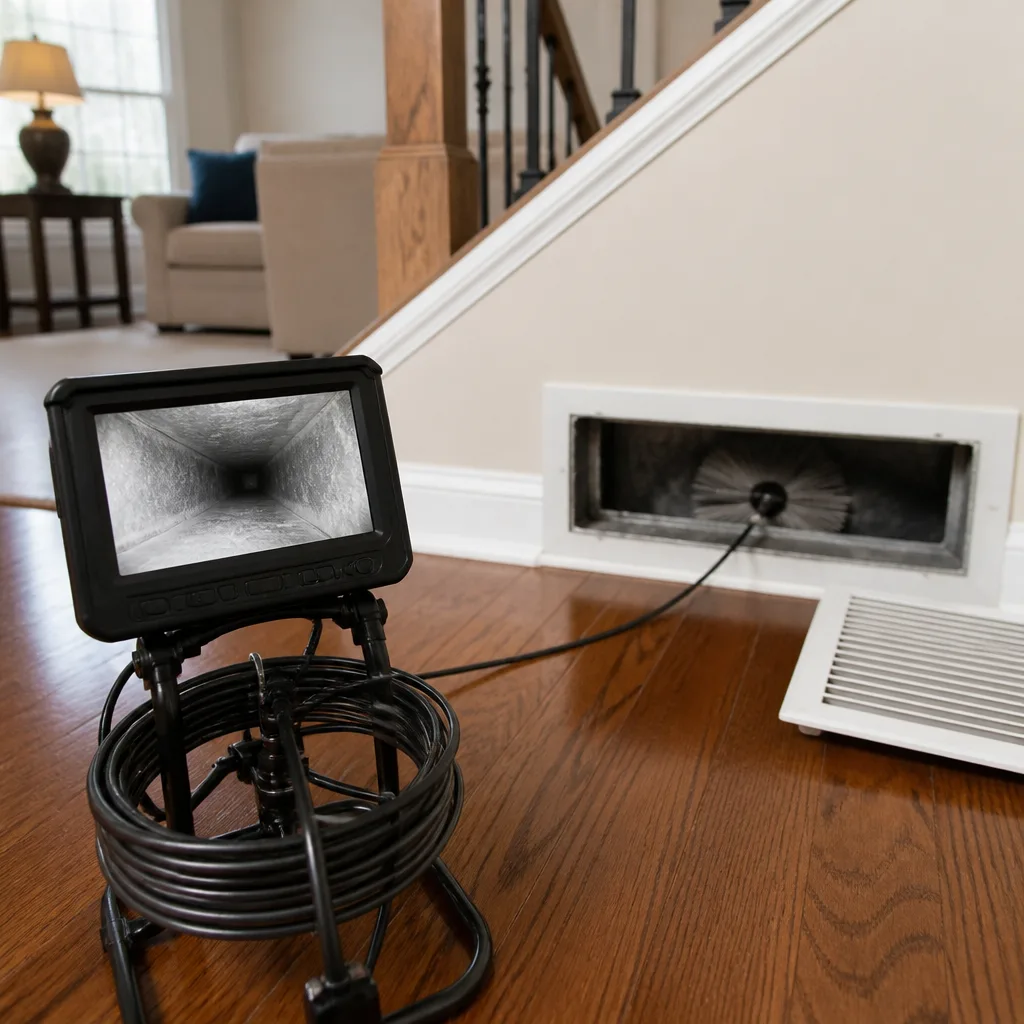 Camera inspection
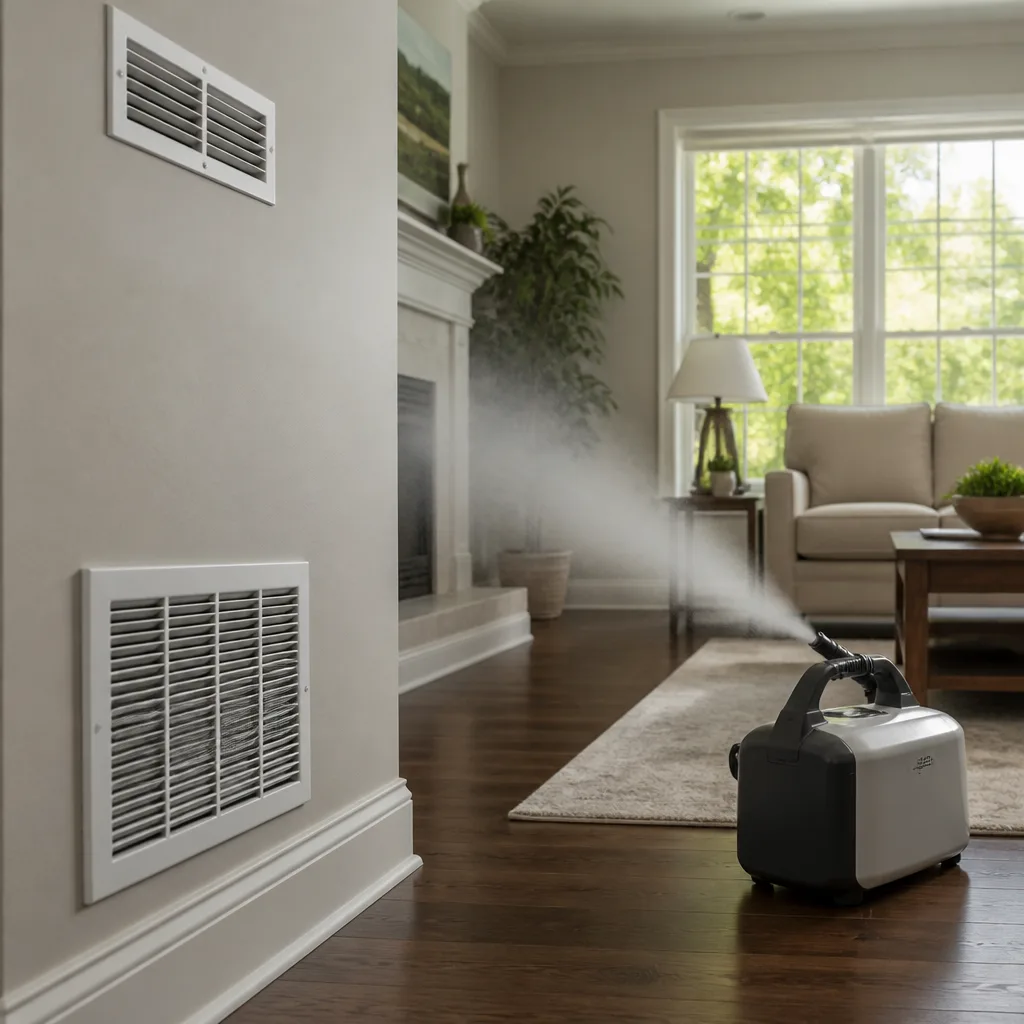 Sanitizing & deodorizing
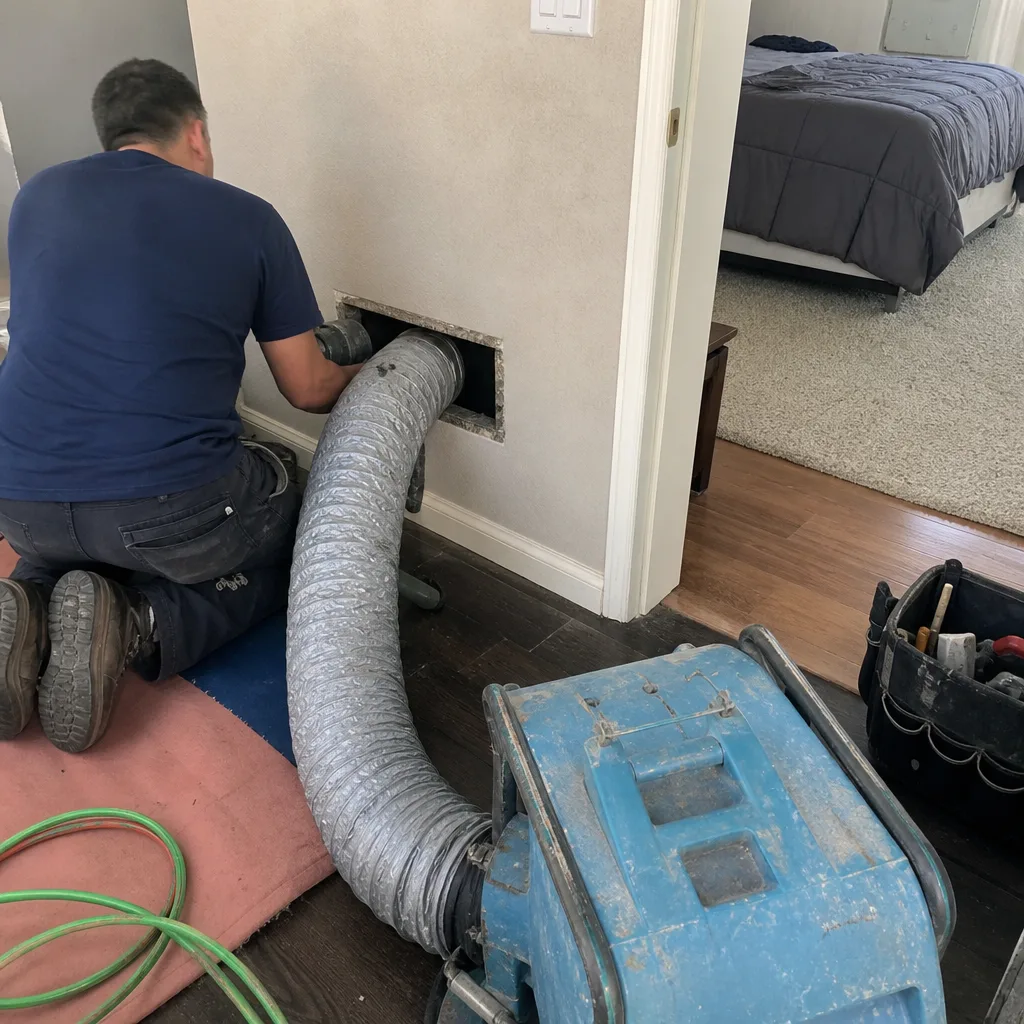
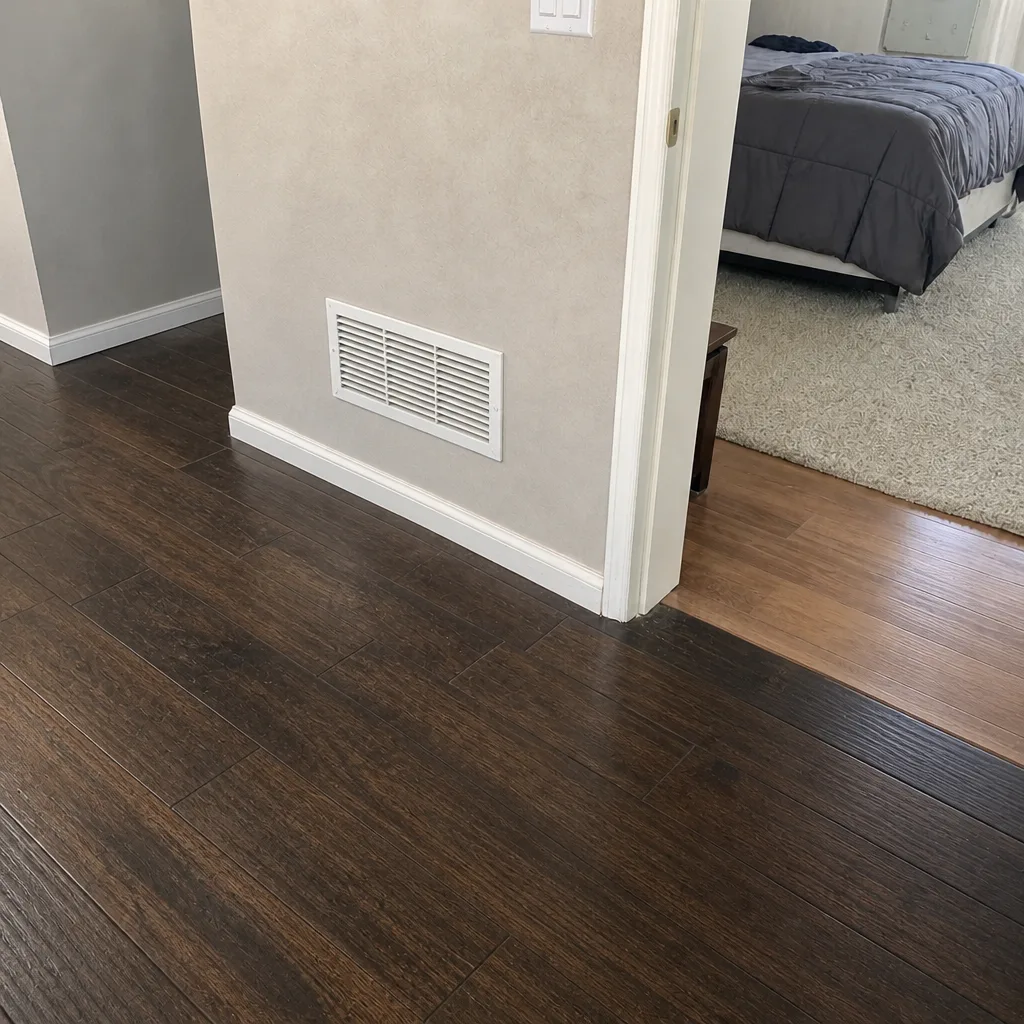
Whole-system duct and dryer vent check with before-and-after photos - you see exactly what came out of your vents
That "$99 whole-house special" is a bait ad - the real number appears once they are in your hallway, or the "clean" is a shop-vac at the register. We photograph the inside of your ducts before and after instead.
Air Duct Cleaning Warning Signs: A Downtown San Diego Homeowner’s Reference Guide
Most people living in Downtown San Diego buildings misread the warning signs of a failing duct system for years. A musty smell gets chalked up to “old building character.” Uneven room temperatures get blamed on a tired thermostat. Visible dust on furniture is accepted as a fact of urban living. But in our experience working inside these buildings, the ducts are often the quiet culprit, and the symptoms follow patterns most guides never explain. This reference guide decodes the specific signals that point directly to the duct system in Downtown San Diego homes, condos, and converted commercial spaces, so you can tell the difference between a duct problem and everything else it pretends to be.
Styles & brands we work with
- Whole-home duct cleaning
- Dryer vent cleaning
- Camera inspection
- Sanitizing & deodorizing
Quick Answer
You likely need air duct cleaning in Downtown San Diego if you notice dust accumulating quickly on surfaces after cleaning, inconsistent airflow between rooms, a musty or stale odor when the HVAC runs, visible debris on supply registers, or allergy symptoms that worsen when the system is on. If airflow has dropped in one specific room or you see crushed or disconnected duct sections, you may need air duct repair before cleaning will do any good.
Table of Contents
- Understanding Duct Odor Signatures in Downtown San Diego Buildings
- What Your Registers and Return Grilles Are Telling You
- Airflow Pattern Changes That Signal Duct Damage
- When Your Symptoms Track the HVAC Cycle
- Cleaning Is Enough vs. Repair Comes First
- What Makes Downtown San Diego Duct Systems Different
- A Room-by-Room Self-Inspection You Can Do Today
- Common Mistakes to Avoid
- When to Call a Professional
- Frequently Asked Questions
- The Bottom Line
Understanding Duct Odor Signatures in Downtown San Diego Buildings
Odors are the most commonly misattributed duct warning sign in Downtown San Diego. Buildings here run the full architectural spectrum, from 1920s masonry structures to high-rise condos built in the last two decades, and each has its own baseline smell. That baseline makes it easy to dismiss a new odor as just part of the building. But duct-originated odors have specific profiles, and once you know what to listen for with your nose, the source becomes clearer.
Biological growth in ducts produces a damp, earthy smell that gets stronger when the system cycles on. It does not smell like bathroom mildew. It is heavier, more organic, and it lingers after the fan stops. In Downtown San Diego’s mild climate, condensation inside duct runs is less frequent than in humid regions, but it still occurs in buildings where the air handler sits in an unconditioned space or where duct insulation has degraded. When warm interior air meets a cool duct surface, moisture forms, and biological growth follows. This odor rarely responds to air fresheners or open windows because the source sits inside the distribution system, not the room itself.
Rodent activity produces a sharply different signature: a pungent, ammonia-adjacent smell with a greasy undertone. Downtown San Diego’s older buildings with shared walls and utility chases give rodents travel corridors between units, and duct chases are part of that network. If the smell intensifies near return grilles, that suggests the source is upstream in the return-side ductwork. Droppings, nesting material, and even deceased animals inside duct runs are not rare in buildings that have gone years without inspection.
Construction debris has a third profile. If your building or a neighboring unit has been renovated recently, drywall dust, sawdust, and demolition fines can migrate into shared duct runs or get pulled into your system through the return. This smell is dry, chalky, and metallic, like a freshly cut concrete floor. It often comes with an immediate increase in visible dust around supply registers. The distinction matters because each of these odor profiles points to a different level of response, from standard cleaning to full remediation with equipment like the Abatement Technologies systems we run for elevated contamination scenarios.
What Your Registers and Return Grilles Are Telling You
Visual inspection costs nothing and tells you more than most people expect. Supply registers and return grilles are the only points where the interior of your duct system is partially visible, and they broadcast the condition of what sits behind them. But they also have limits, and knowing what they miss prevents false confidence.
Start with the supply registers, the ones that blow air into rooms. Remove one, if it lifts out easily, and look at the metal or flex duct boot behind it. Dark gray or black particulate caked on the boot walls means the duct interior has accumulated years of fine dust, skin cells, and fiber debris. Light tan or brown buildup is older, more compacted material. Either way, if you can scrape it with a fingernail and it cakes, the rest of the duct run likely looks similar or worse. Supply registers that show a gray film on the vent fins themselves, especially on the downstream edge, tell you the system has been pushing dirty air for a long time.
Return grilles tell a different story. The return side pulls air from your living space into the system. A return grille matted with dust, pet hair, or a fuzzy gray blanket means the filter has been missing, undersized, or left unchanged, and unfiltered air has been entering the system. In Downtown San Diego buildings with limited mechanical space, filters are often installed in awkward spots, and we have seen return cavities that likely have not been opened in a decade.
What visual inspection misses: the middle of trunk lines. You can see the first few inches of a duct boot, but you cannot see a collapsed flex duct run, a disconnected elbow, or a blockage deep in the trunk. Those failures live where the ductwork passes through walls, floors, and ceiling cavities, and they require professional equipment to locate and assess. A register that looks clean tells you nothing about the twenty feet of duct behind it.
Airflow Pattern Changes That Signal Duct Damage
Airflow is the most objective warning sign because it produces measurable differences you can feel. When one room in your Downtown San Diego condo gets strong airflow and another gets almost none, the problem is rarely the thermostat or the air handler. It is the distribution system. And the specific pattern of the imbalance points to the specific type of failure.
Collapsed flex duct is the most common airflow failure in Downtown San Diego buildings with flexible, insulated duct runs. Flex duct is a wire-reinforced tube wrapped in insulation and an outer vapor barrier. When it gets crushed, kinked, or compressed, the interior diameter narrows, and airflow to that branch drops sharply. This often happens during renovations when contractors move duct runs to accommodate new soffits, lighting, or ceiling work. It also happens over time as the duct sags in ceiling cavities. A room that once heated or cooled normally and now barely responds to the system is a classic collapsed-duct candidate.
Disconnected sections create a different pattern. If a joint or elbow separates, conditioned air spills into the cavity space instead of the room. The room gets weak airflow, but you may also notice the wall, floor, or ceiling near the disconnection feels warmer or cooler than surrounding surfaces. In a Downtown San Diego high-rise, that conditioned air is often feeding a chase or plenum shared with other units, which creates oddly temperate hallways and stairwells while your unit struggles. This is also a situation where you may be paying to condition space that is not yours.
Blocked trunk lines produce system-wide symptoms. Construction debris, rodent nesting, or years of accumulated material can reduce the main trunk’s capacity. The result is not one weak room; it is a whole-building performance drop. The system runs longer, every room takes longer to reach temperature, and the air coming from registers feels weak across the board. In our work with Blackstone Air Duct Cleaning, we use the same Rotobrush and Nikro systems that restoration professionals rely on to clear trunk line blockages without cutting into walls. These airflow patterns, once identified, are usually resolvable, but they rarely fix themselves.
When Your Symptoms Track the HVAC Cycle
Allergy and respiratory symptoms are the hardest warning sign to attribute because so many variables are in play. Downtown San Diego’s air quality is influenced by vehicle traffic, construction activity, and seasonal pollen, and any of those can trigger reactions. The diagnostic question is not whether you have symptoms, but whether those symptoms track the operation of your HVAC system.
The pattern looks like this: you wake up congested, but you clear up after being outside for a few hours. Or symptoms flare in the evening when the system runs its longest cooling cycle. Or you notice that you feel better in hotel rooms and offices but worse at home. These are correlation signals. If your ducts are dirty enough to be a meaningful source of indoor particulate, the HVAC system is the delivery mechanism, and every cycle pushes a fresh dose of dust, fiberglass particles from degraded duct insulation, or biological material into the air you breathe.
One underappreciated detail in Downtown San Diego buildings is the age of the duct system relative to the unit. Many buildings were constructed before current filtration standards existed, and the ducts have never been deep-cleaned. The visible part of the unit may have been renovated, with new floors and paint, while the invisible part, the ducts behind the registers, remains original. If you have new allergies, new respiratory sensitivity, or a child who developed symptoms after moving into a Downtown San Diego unit, the duct system deserves a serious look.
We are not here to give medical advice. But as indoor air quality specialists, we can tell you that the pathway between a dirty duct system and chronic low-level respiratory irritation is well established in our industry. Cleaning the ducts is not a medical treatment, but it removes a known source of airborne particulate from your living environment.
Cleaning Is Enough vs. Repair Comes First
This distinction saves Downtown San Diego homeowners from a common misstep: paying for cleaning when the real problem is damage. Cleaning is the right response to accumulated contamination. Damage requires structural work first. Here is how to tell the difference.
Cleaning is sufficient when:
- The symptoms are generalized: dust on all surfaces, moderate odor when the system runs, visible buildup on multiple registers.
- Airflow is consistent room to room, even if the system has never been deeply cleaned.
- The building has undergone renovation but no physical changes were made to the duct runs.
- No signs of water intrusion, rodent activity, or visible disconnection exist.
- The ducts are original and dirty, but intact.
Repair comes first when:
- One or two specific rooms have sharply reduced airflow while others are normal.
- You can see a crushed, kinked, or separated section of flex duct anywhere in the system.
- There is visible water staining or evidence of active biological growth on duct surfaces.
- The return side shows evidence of rodent entry or nesting.
- You can hear rattling, banging, or rushing air from inside walls or ceilings, indicating loose or disconnected sections.
In a repair-first situation, cleaning alone is a waste of money. If the duct is crushed, cleaning it does not restore airflow. If it is disconnected, cleaning it does not stop conditioned air from dumping into a wall cavity. If rodents are active, cleaning removes the debris but not the entry point. The correct sequence is repair first, then cleaning to remove the debris and contamination that accumulated in the meantime. At Blackstone, we handle both under one roof, which means we do not have to bring in a second contractor or coordinate two companies. The full lifecycle, dryer vent cleaning included, is a single specialist job.
What Makes Downtown San Diego Duct Systems Different
Downtown San Diego buildings have a set of characteristics that change how duct systems age and fail, and anyone doing work here needs to understand them. The housing stock is not a single type; it is a mix of high-rise condos, converted lofts, mid-century apartment buildings, and a smaller number of single-family homes in the neighborhoods surrounding the core.
High-rise and mid-rise condos often share mechanical chases and duct risers with multiple units. That means your duct system is not fully independent. Activities in adjacent units, renovations, cooking, a plumbing leak, can introduce moisture, debris, or odors into shared spaces that eventually find their way into your returns. It also means that some duct access points require coordination with building management or an HOA, and the work must respect fire-rated assemblies and building codes that do not apply to a standalone home.
Converted lofts and older masonry buildings introduce a different challenge: duct runs that were retrofitted into spaces never designed for them. These systems often have long, convoluted runs with sharp bends, undersized returns, and flex duct compressed into tight ceiling cavities. Aging in these systems is accelerated because the ductwork is fighting the geometry from day one. Downtown San Diego buildings constructed before the 1980s frequently have no dedicated return in each bedroom, which produces pressure imbalances and pulls air from building corridors, parking areas, and adjacent units.
The mild climate also plays a role. With no freeze-thaw stress and no snow load, the mechanical stress on duct systems here is lower than in many other regions. But that same mild climate means systems run year-round, and many Downtown San Diego residents never have a true off-season. The system operates in cooling mode for most of the year, cycles frequently, and accumulates particulate steadily. Without the forced break of a harsh winter, some systems have effectively run continuously for years, and the duct interiors show it.
A Room-by-Room Self-Inspection You Can Do Today
This is a structured inspection you can complete in under an hour. It will not replace a professional assessment, but it will tell you whether one is warranted. Walk each room with these steps in order.
- Turn the system fan to ON, not AUTO. This keeps airflow moving during the entire inspection so you can feel and hear what the system does constantly instead of only during heating or cooling calls. Set the thermostat fan switch, and leave it on for the full walkthrough.
- Walk each room and hold your hand at every supply register. Note the airflow strength on a simple scale: strong, moderate, weak, or none. Write it down. The goal is to compare rooms. A room with weak or no airflow when the fan is on is a strong signal of a disconnected or collapsed branch.
- Look at each supply register closely. Check the vent fins and the visible boot behind them if the register lifts out. Note any gray film, black particulate, or visible dust caking. Photograph what you find with your phone so you have a record.
- Find every return grille and do the same. Returns are usually larger and located in central areas. Remove the grille if it lifts. Look at the filter, if there is one at the return. A filter that is bowed, gray, or loaded with visible debris tells you the system has been pulling unfiltered air or the filter has been ignored for a long time.
- Run your hand along the ceiling and upper walls near the duct paths. If you feel temperature differences, a warm spot in a cooled room or a cold spot in a heated one, that may indicate a leak or disconnection dumping conditioned air into the cavity.
- Listen at each register. Air should flow with a soft, even whoosh. If you hear whistling at one register, that is likely a restriction or a damper issue. If you hear banging or rattling inside the wall or ceiling when the blower starts or stops, that suggests loose duct sections or a dislodged damper.
- Sniff at the return grille with the fan running. This is the most direct olfactory test. The return is where air enters the system, so odors from the interior of the ductwork are strongest there. Earthy, musty, or animal smells at the return confirm the source is inside the system, not the room.
After this walkthrough, you will have a room-by-room airflow map, a register condition record, and an odor profile. That is exactly the information a professional needs to diagnose the system quickly.
Common Mistakes to Avoid
- Attributing every symptom to the building’s age. Downtown San Diego has old buildings, but old is not a diagnosis. A duct system that has not been cleaned in years produces symptoms that are fixable. The building’s age does not explain dust, odor, or weak airflow; neglect or damage does.
- Replacing the thermostat first. Uneven temperatures across rooms are far more often a distribution problem than a control problem. A new thermostat will not restore airflow to a collapsed duct run. Spend your money on the inspection before the replacement.
- Buying a stronger air filter without checking the system. High-MERV filters restrict airflow, especially in older systems with marginal static pressure. If your ducts are dirty and your filter is clogging quickly, a stronger filter can make airflow problems worse, not better.
- Scheduling cleaning when the real problem is damage. If a duct is crushed or disconnected, cleaning does nothing. Have the system assessed first so you know whether cleaning or repair is the correct first step.
- Ignoring the dryer vent because the HVAC seems fine. Dryer vents are a separate duct system with a different failure mode, and lint accumulation is a fire hazard. Your dryer vent should be inspected and cleaned on its own schedule, regardless of how your HVAC ducts look.
- Assuming a renovated unit means clean ducts. Renovation dust settles inside the duct system, and unless the ducts were sealed during construction and cleaned afterward, the renovation may have made the interior worse. New floors and paint tell you nothing about what is behind the registers.
When to Call a Professional
Call a professional when your self-inspection turns up weak airflow in specific rooms, visible buildup on multiple registers, odors that track the fan, or any sign of water, rodents, or disconnection. These are not situations where another filter change or a different thermostat will help. If your Downtown San Diego building is older, has shared mechanical chases, or has been renovated in the past few years, the probability of a duct problem climbs with each passing year. Blackstone Air Duct Cleaning offers free estimates in Downtown San Diego. Call (866) 282-6412. We answer 24/7. Fast dispatch from 7am to 7pm, Sunday through Friday.
Frequently Asked Questions
Dust accumulation, musty odors, and generalized poor air quality point toward cleaning, while sharp airflow loss in specific rooms, visible duct damage, or rodent activity point toward repair first. If you have both categories of symptoms, the repair should happen before the cleaning, because cleaning damaged ducts does not correct the structural problem.
Air duct cleaning in Downtown San Diego is priced per job, not per vent, and the cost depends on the size of the system, the number of units, the accessibility of the ductwork, and the level of contamination. The written estimate sets the final price before work begins, and we do not add per-vent charges after the fact. Call (866) 282-6412 for an exact quote. Estimates are free.
When your allergies flare specifically when the HVAC system runs, the ducts have likely become a reservoir of dust, pollen, pet dander, or biological material that gets re-entrained into the air with every cycle. The system is not creating the allergens; it is recirculating what has settled inside the ductwork. A professional cleaning removes that reservoir.
There is no single rule, but buildings in Downtown San Diego with year-round system operation, shared mechanical chases, or a history of renovation generally benefit from professional inspection every two to three years, with cleaning as the inspection findings dictate. Homes with pets, smokers, or recent construction may need attention sooner. The condition of your registers and the strength of your airflow are better guides than a calendar.
Yes, because the musty smell is strongest when the fan runs and weakest when the system sits idle. If the odor cycles with the HVAC, comes and goes with the seasons, or intensifies near return grilles, the source is almost certainly inside the duct system rather than in the room itself. Biological growth, accumulated moisture in the duct lining, or rodent activity can all produce a cyclic musty odor.
In older Downtown San Diego buildings, air duct cleaning is often more valuable than in newer construction because the ducts have typically accumulated decades of particulate, renovation debris, and possibly biological material. These systems also tend to have more convoluted runs and more restricted access, which means the buildup is harder to address without professional equipment. A thorough cleaning with professional-grade tools often produces a noticeable difference in air quality and system performance.
The Bottom Line
The warning signs of a duct problem are easy to misread when you live with them every day. Dust becomes normal. A faint odor becomes the building’s character. Weak airflow in one room becomes a quirk of the floor plan. But these symptoms are data, and they point somewhere specific. The registers, the returns, the airflow map, and the odor profile together tell a clear story about what is happening inside your ducts. Read that story correctly, and you will know whether you need cleaning, repair, or both. Read it incorrectly, and you will keep living with degraded air while the real problem worsens. In Downtown San Diego buildings, with their shared systems and aging infrastructure, the cost of misreading the signs is measured in years of unnecessary exposure. We use Rotobrush and Nikro systems, the same ones restoration professionals rely on, and we handle the full job, from cleaning to structural repair, under one roof. Clean ducts. Repaired ducts. Better air.
Written by the team at Blackstone Air Duct Cleaning, serving Downtown San Diego since 2018.
See the difference
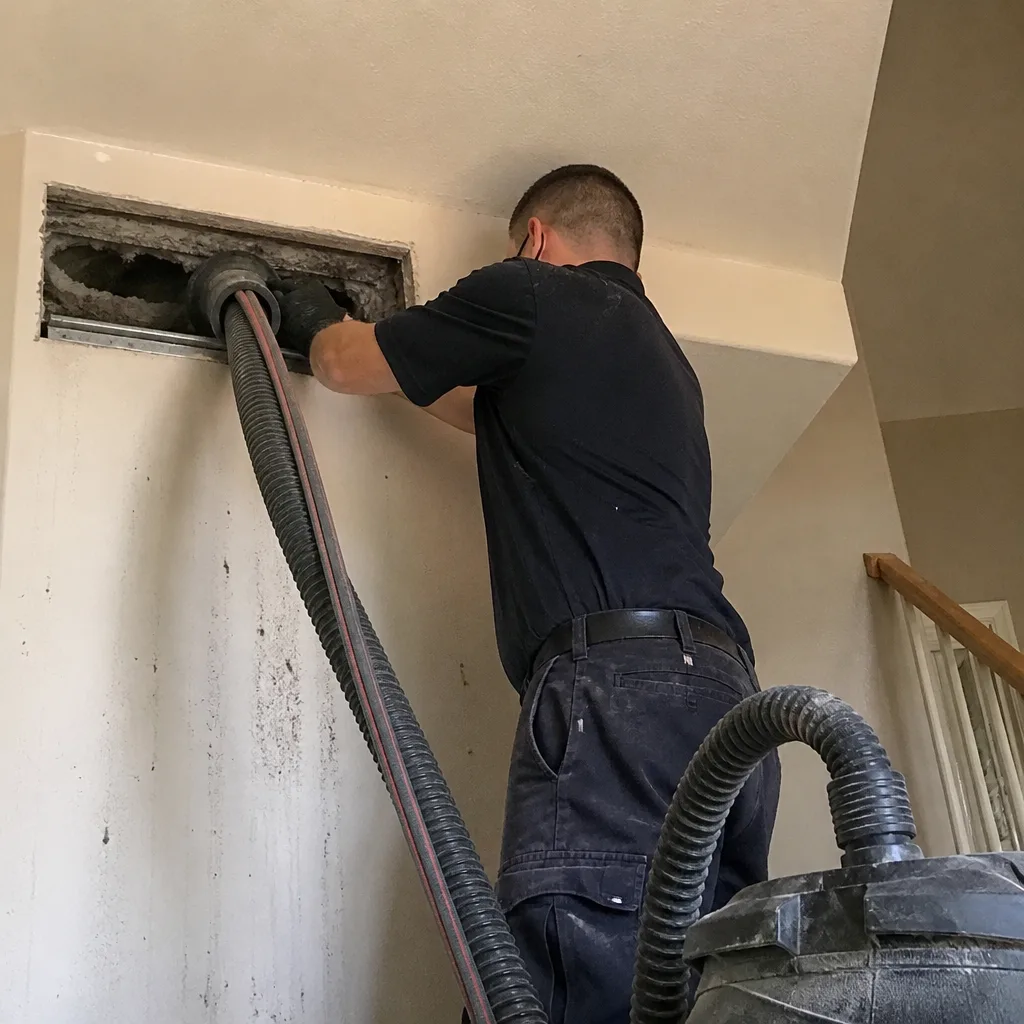 Before
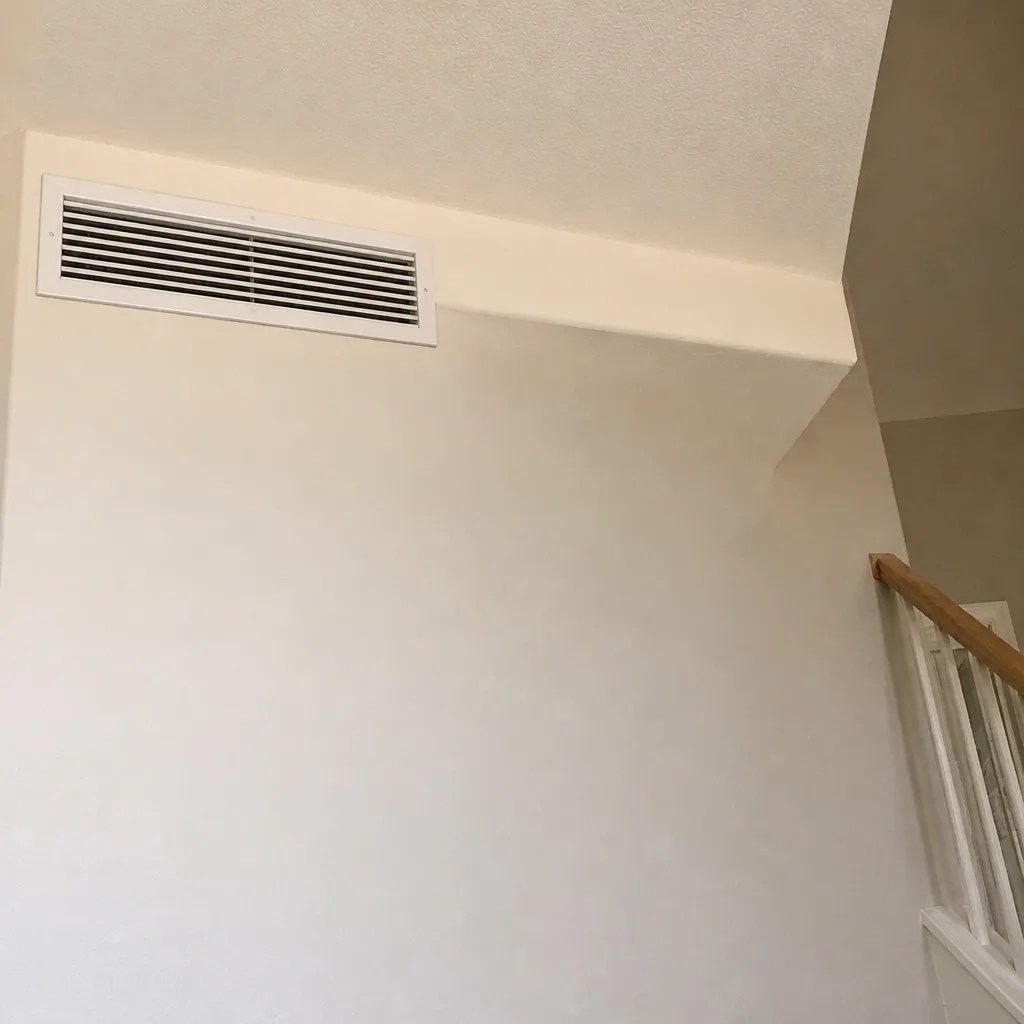 After
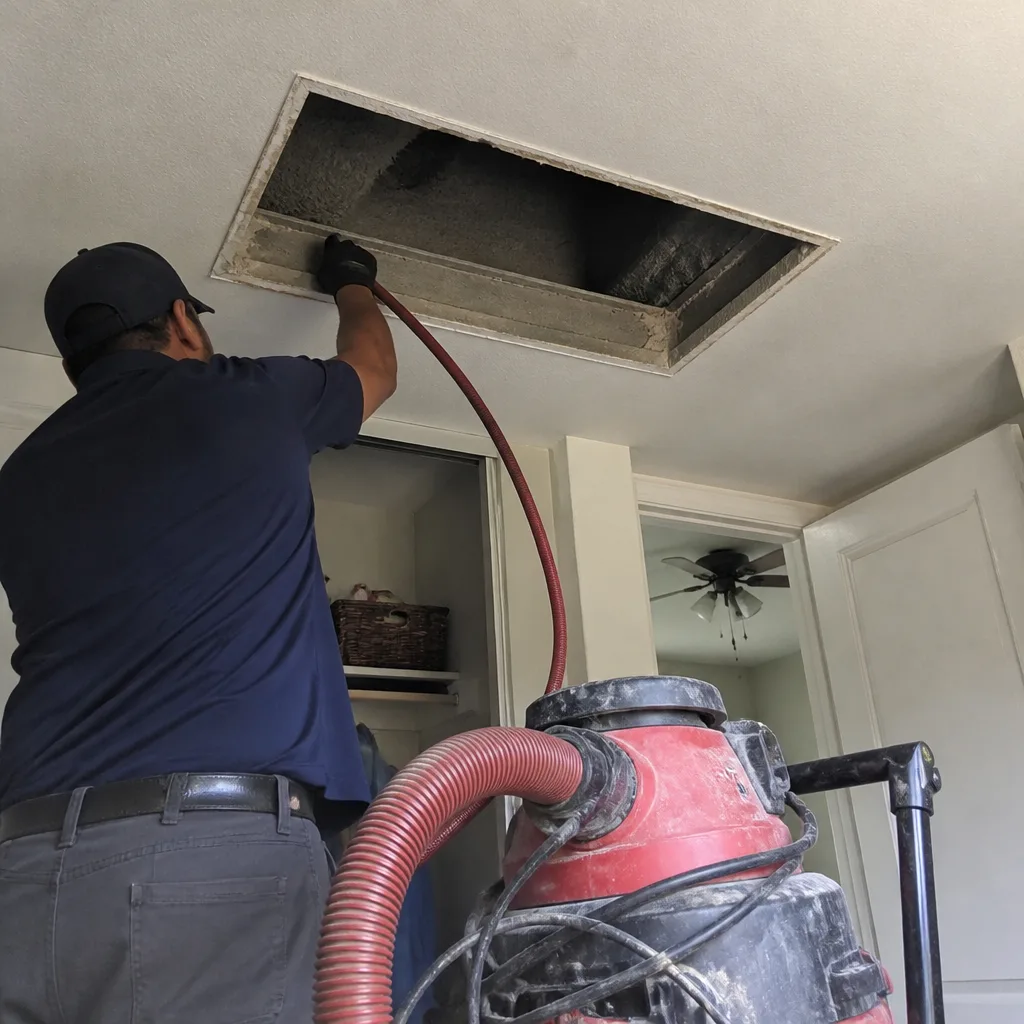 Before
 After
 Before
 After